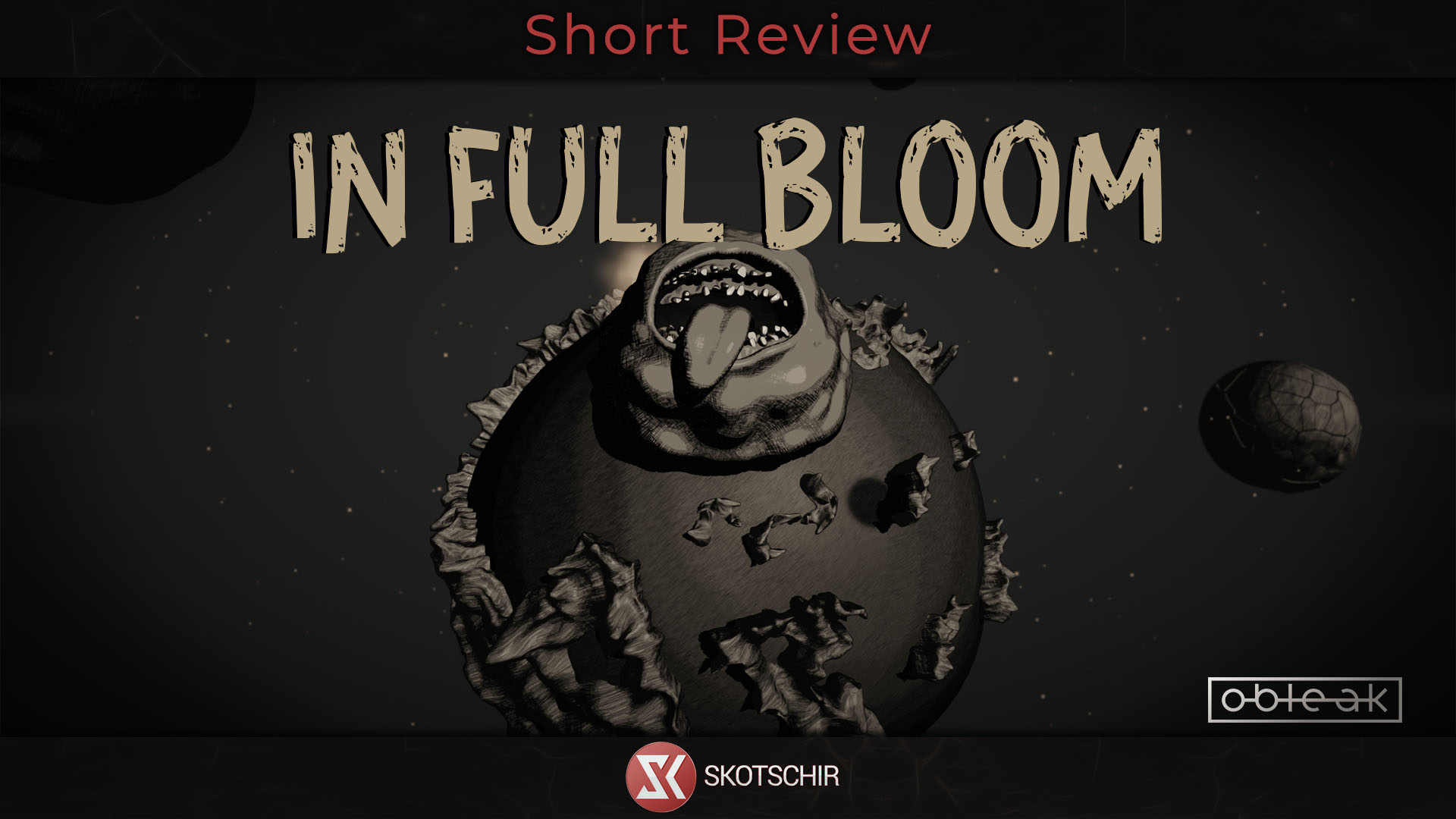
At first glance, “In Full Bloom” is a grotesque-looking incremental game centered on the constant feeding of a creature.
In the incremental game “In Full Bloom,” we follow a small, grotesquely repulsive creature as it grows slowly but steadily, devouring more and more along the way. We feed it a vast array of things—starting with a single bacterium, moving on to houses and entire landscapes, and eventually consuming entire planets. The journey frequently offers up some truly bizarre moments. In this brief review, we explore the unique charm of this title.
The Baby
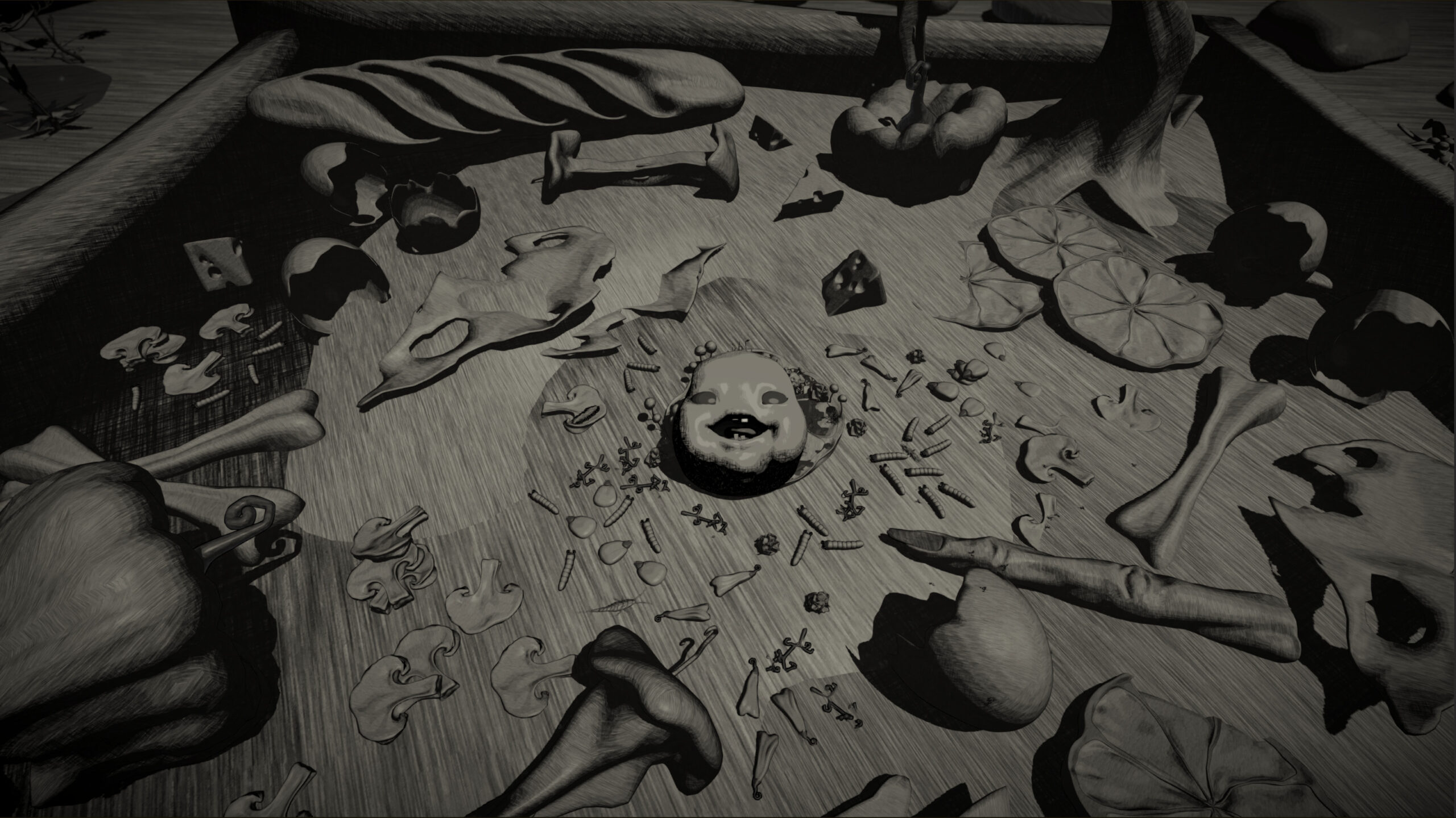
In recent months, incremental games—titles based on steady growth that often incorporate “idle” mechanics—have been flourishing. As a result, developers are experimenting with a wide variety of concepts and settings. In “In Full Bloom,” we look after a creature that the developers at obleak Games refer to as a “baby.” It is defined by an insatiable hunger, requiring a constant supply of food—and it is our job to provide it.
Initially, this “baby” is little more than a repulsive, small mass of flesh, designed to be truly off-putting—not least because it constantly emits a pathetic, grunting sound. For those with misophonia (an intense aversion to specific sounds), the noises the creature makes while eating and digesting might well be the stuff of nightmares. Even we—who do not suffer from misophonia—found ourselves flinching at some of the sounds it produces. It would be somewhat manageable if these noises only occurred occasionally, but since our task is to constantly feed the creature, we end up hearing them all the time.
Katamari-Style
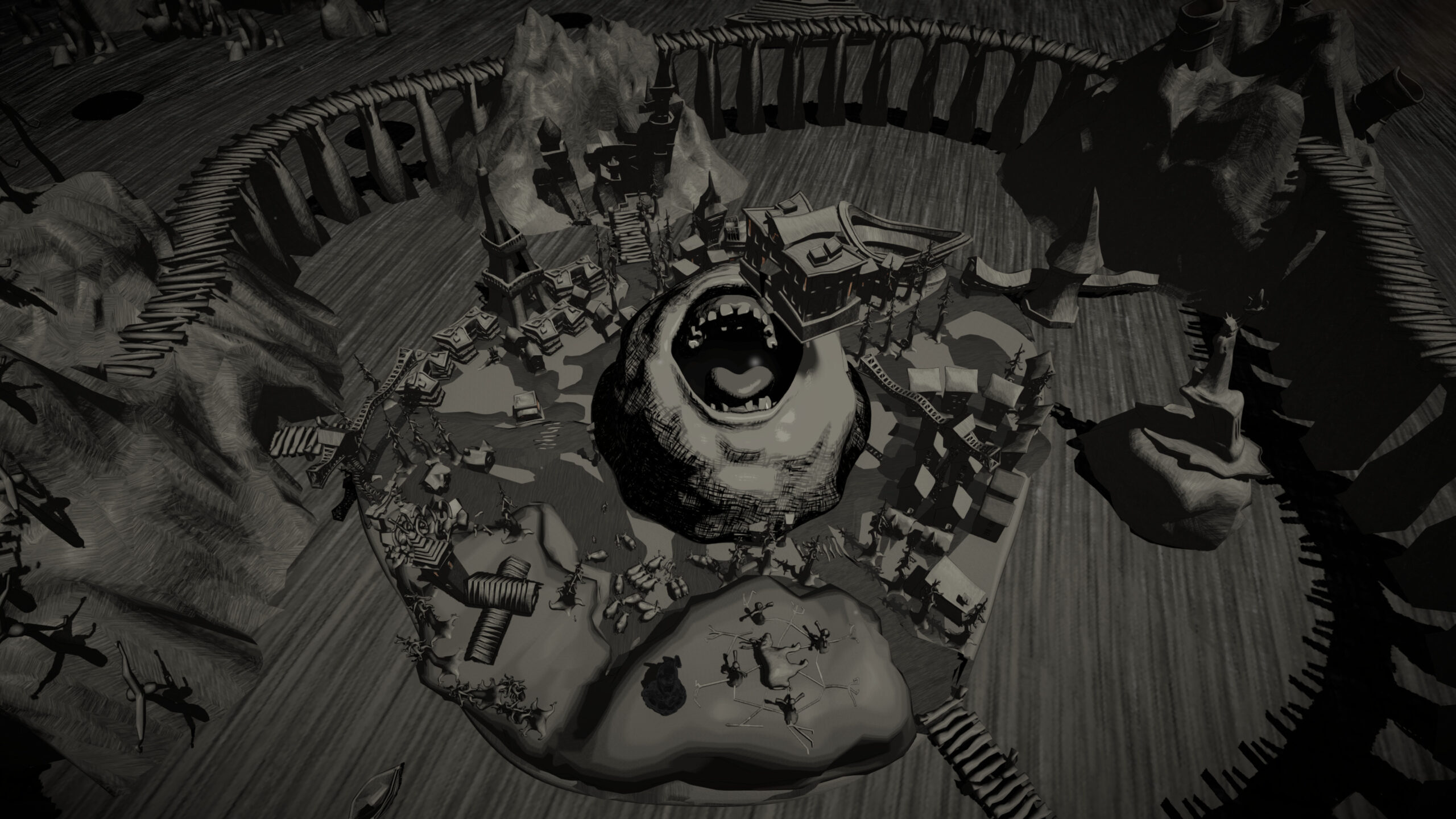
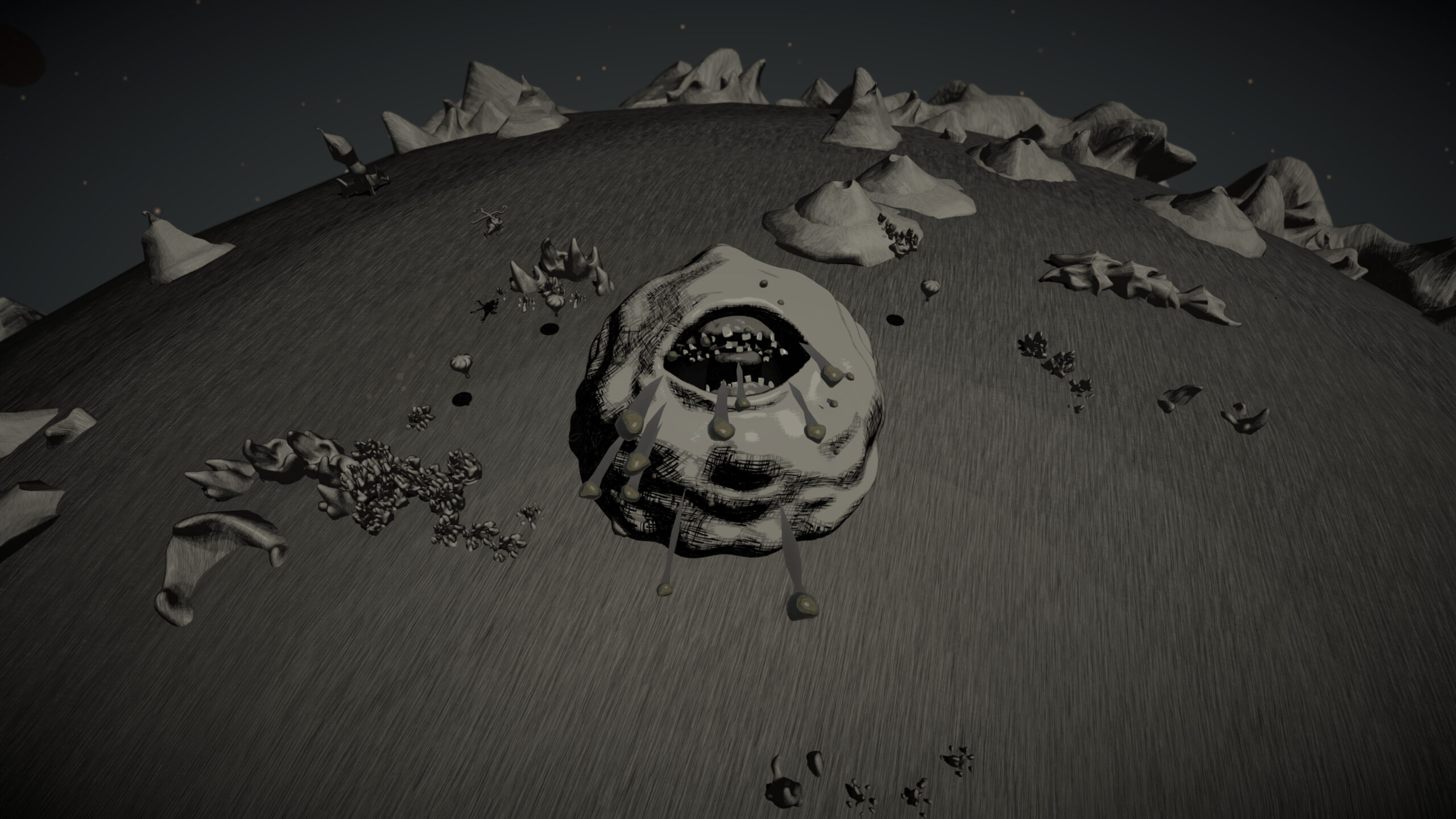
As previously mentioned, we must feed the creature without pause; it possesses an insatiable hunger, demanding more and more. Its growth is exponential. We begin with a small entity that feeds on various bacteria, eventually growing large enough to devour worms and maggots. Before long, we are feeding it houses and trees—or, for that matter, entire regions. We start as a tiny object, seemingly surrounded by dangers, only to realize shortly thereafter that *we* have become the danger to everything around us.
If this is still hard to visualize, think of “Katamari.” The principle is similar: you start as a small object, rolling over an increasing number of items and gradually growing until you reach a massive size—at which point, nothing can stop you. Perhaps the biggest difference compared to Katamari is that there are no abrupt transitions between levels; your progress is never reset.
Rapidly Wearing Thin
While everything feels fresh, grotesque, and even a bit macabre at first, the core gameplay loop begins to lose its luster rather quickly. Constantly dragging new objects into the creature’s maw is both entertaining and, at the same time, a tedious chore. The fun—and the satisfaction—comes from witnessing constant progress as the creature grows, eventually becoming a threat to everything in its vicinity. Yet, within 20 minutes, it becomes entirely clear what will happen next and how the experience will unfold. In total, a single playthrough took us only about 40 minutes.
The focus of “In Full Bloom” is therefore on multiple playthroughs, precisely because there is much to discover that might not seem particularly interesting at first glance. For instance, quite early in the game, airborne bacteria gather around the baby—and one achievement requires you to feed all of them to the baby. We hadn’t really paid any attention to that during our first run. Those who don’t typically replay games might want to consider whether it’s worth the €3.65 price tag.
Grayscale
Even though there is more to discover beyond the repetitive act of feeding, it wasn’t enough to compel us to start new playthroughs again and again. The title simply lacks the ambition for that, and—aside from achievements—offers hardly any incentive to begin anew. Furthermore, the visual presentation, rendered entirely in grayscale, won’t be to everyone’s taste. Much like the gameplay loop, the aesthetic wears thin quite quickly. While it feels interesting and fresh at first, it soon becomes just another background element, lacking any real distinction. It’s a bit of a shame, as the core concept seems quite intriguing; ultimately, however, not enough is made of it.
Conclusion
““In Full Bloom” enters the incremental game genre with an intriguing premise: you must continuously feed a creature with an insatiable hunger. The visual style—rendered entirely in grayscale—fits the theme well, though, much like the core gameplay loop, it quickly loses its novelty. Dragging objects into the creature’s maw without a break becomes rather unmotivating over time. If you take your time, a single playthrough will likely last about an hour. Is that enough? Even at a price of €3.65, it feels quite short. Ultimately, the title offers little incentive for multiple playthroughs, which effectively eliminates a large portion of its intended playtime. While those new to the incremental genre might find it worth a look, we see little reason to offer a general recommendation.“
The review key was kindly provided to us by the developer.