
With “The Blood of Dawnwalker”, the new studio Rebel Wolves delivers a compelling, dark vampire RPG with a focus on replay value.
“The Blood of Dawnwalker” is, in spirit, an RPG much like “The Witcher 3” – and Rebel Wolves, the studio behind the game, makes no secret of that. After all, the studio was founded by several developers who had previously worked on that very hex-based game at the major Polish studio CD Projekt RED. And this dark vampire RPG, featuring protagonist Coen, certainly can’t deny that legacy – the similarities are just too great—but it doesn’t have to! We took a closer look at Dawnwalker and are sharing our impressions here.
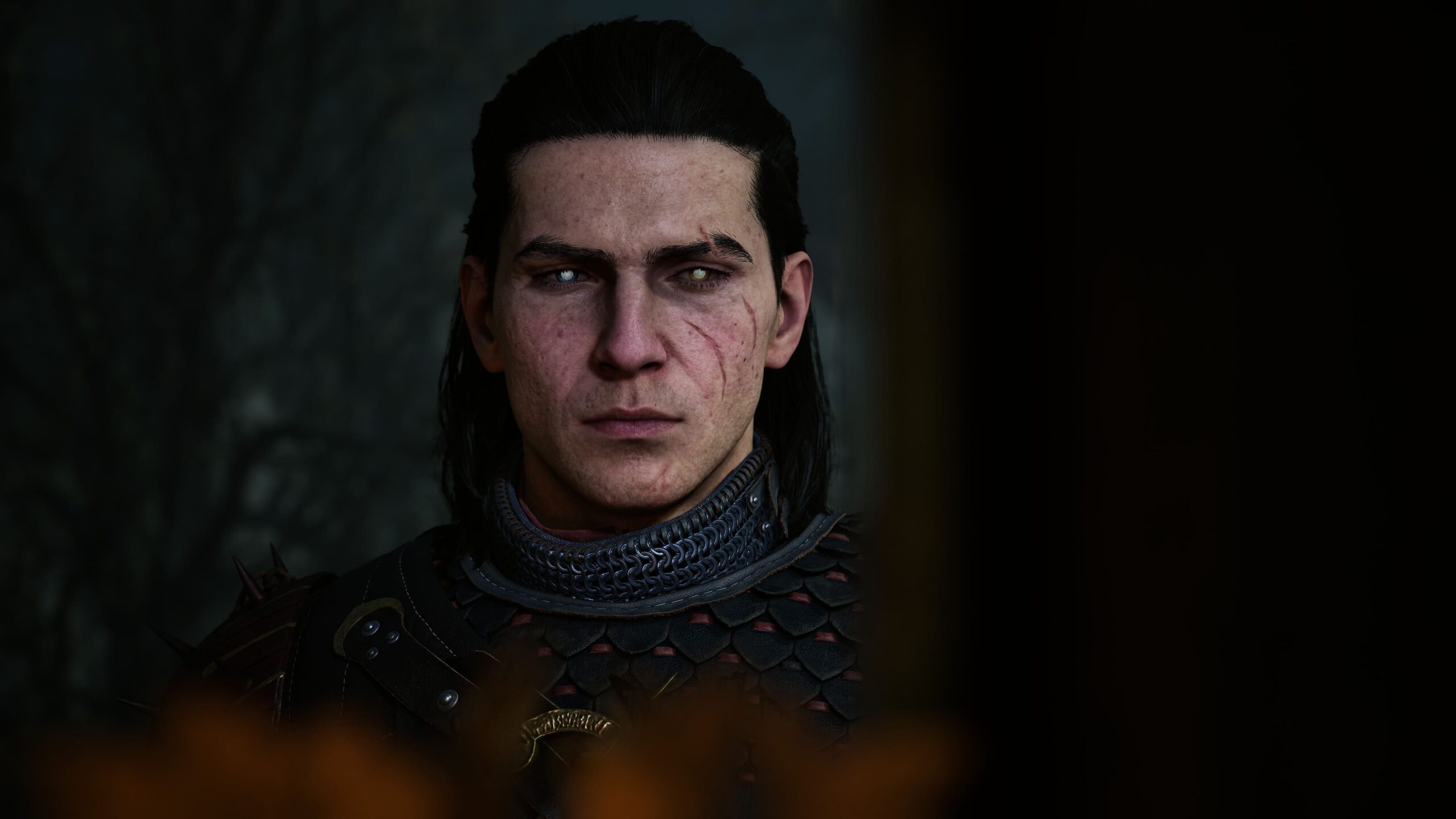
Coen from Laslea
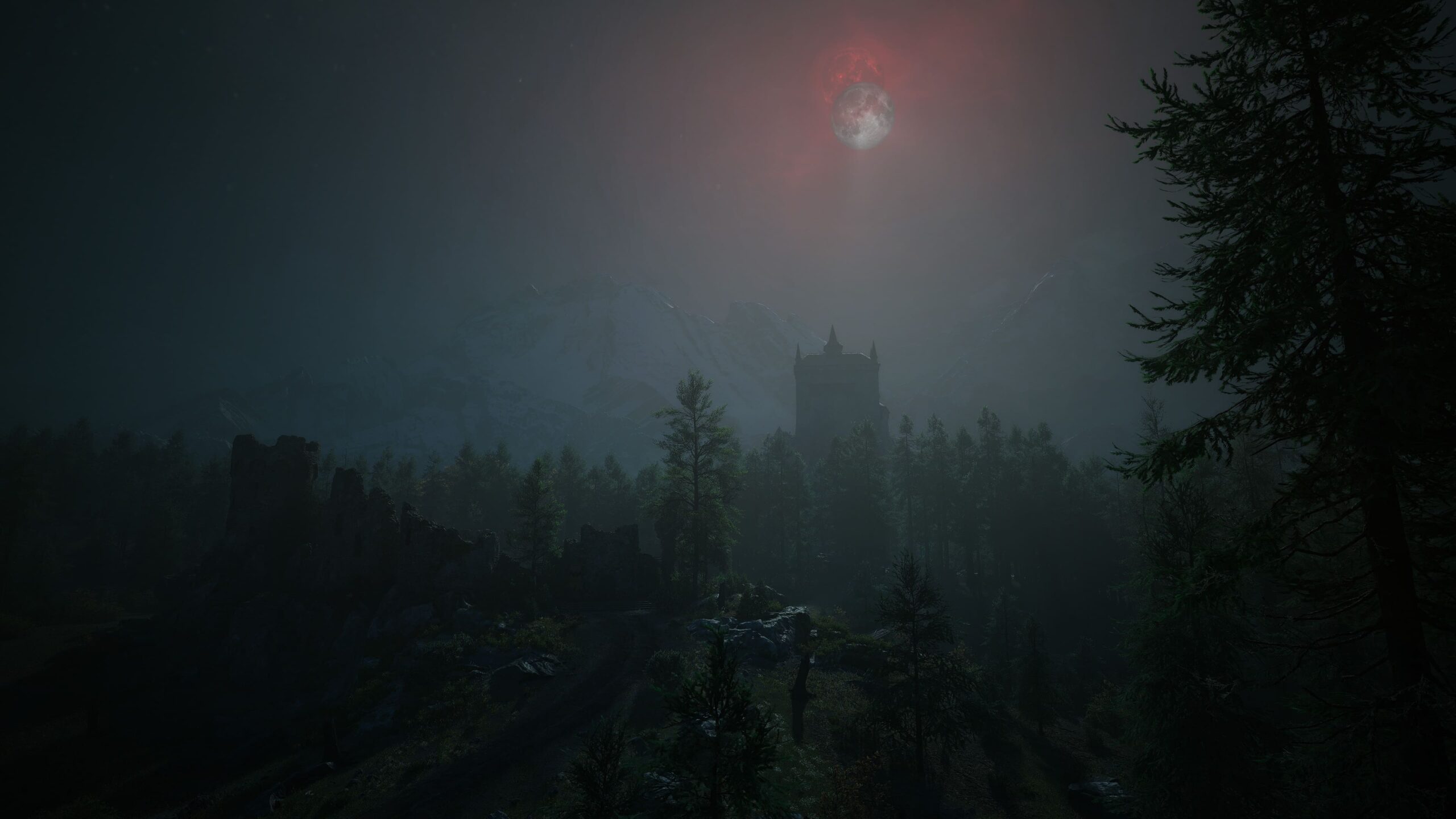
But despite all the similarities, let’s start from the beginning. Our journey begins with Coen from Laslea. The village of Laslea is located in the Sangora Valley, which was severely ravaged by the plague. Powerful vampires have taken advantage of the chaos that ensued and now rule the valley with an iron fist. In exchange for saving the remaining population from the disease, they demand regular blood sacrifices.
They demand these blood sacrifices as part of special rituals that take place regularly, during which they also determine which residents are still worthy of life. And so the trouble begins right away, because Coen’s mother needs medicine every now and then to keep her going. So we have to make sure to get this medicine from the local herbalist, Anca. But on the way there, we keep running into residents who need our help—and with that comes one of the core features of “The Blood of Dawnwalker”: the time aspect. But more on that later.
So much to do, so little time
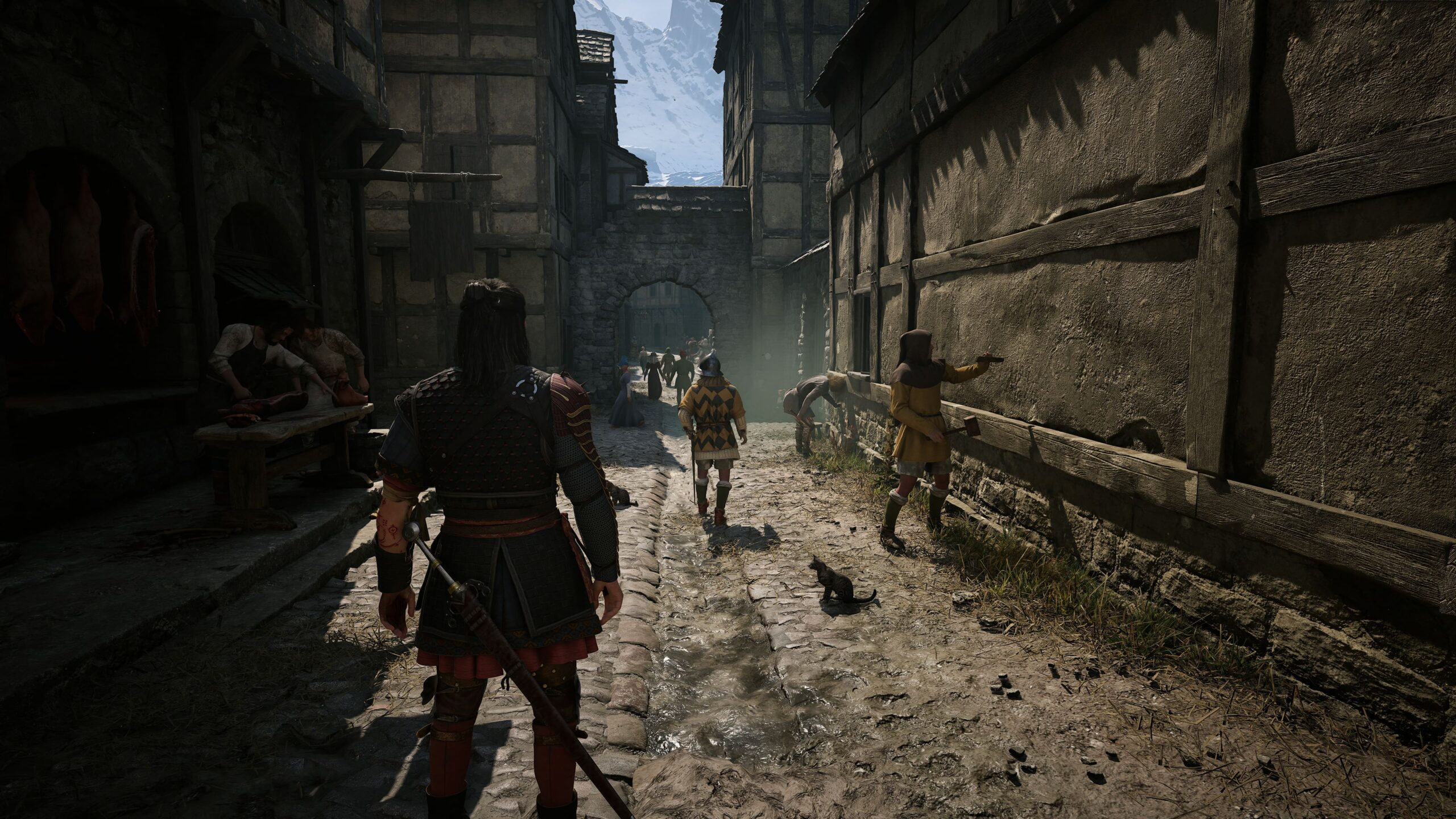
No sooner had we stumbled out of our house than our siblings were waiting for us—they wanted to go fishing. Since we’re a good brother, of course, we followed our siblings to the river and helped them set up their fishing rods. However, setting up the gear takes time. Never mind, let’s do it. Once that’s done, we head back to the village, where we suddenly notice a woman mourning at an open grave. So we go over and ask what’s going on. She tells us that a small silver pendant was stolen from her son’s grave. All right, let’s look into it—but here, too, certain interactions keep taking up time.
This continues until we’re running out of time and remember that we actually wanted to get medicine for our mother. So we take care of that before the vampire fair begins. However, our father had actually wanted to train with us on the sword before nightfall. But there’s no time left for that now, so we head to the fair as a family. And this is where the horror begins…
Hurry up, or…?!
Most interactions in Dawnwalker cost time—specifically, a time segment. We have a total of 16 segments available per day: eight during the day and eight at night. Depending on what we want to do, we should manage this time wisely, because time doesn’t just pass by. No, time is tied to the main quest. Because at the end of the day when we’re supposed to gather medicine for our mother, our family is kidnapped. Prince Brencis, the vampire who rules the valley, does, however, give us 30 days to free our family.
So we set out in the Sangora Valley in search of important allies and help the residents make their daily lives a little more bearable and free them from the vampires’ iron grip. Time and again, we have to decide what we want to do during the day or at night—though some tasks can only be completed at a specific time of day. While this might sound like we have to plan strategically in advance, it’s actually nowhere near as stressful as it sounds.
Decisions
It’s not just the decisions about what we tackle, how, and when that matter—but also those tied to the game world. Brencis’s court includes three powerful vampires whom we can sabotage and then eliminate before the big final battle. But we can also largely ignore them and only face them in the finale. In addition, as the game progresses, we repeatedly encounter NPCs with whom we can interact. Whether it’s just having a brief, trivial conversation or draining them (at night) to our advantage.
After all, as a vampire, we must constantly battle our thirst for blood. While we usually have it under control, it can happen that the thirst strikes in the middle of a dialogue, causing us to drain an NPC without actively intending to. Admittedly, though, this is relatively easy to avoid. After all, we only lose control of our thirst when we’re down to our last health bar as a vampire. If we make sure we’re well-fed before any dialogues, nothing will happen.
Time, Time, Time
When we use our vampire form—or rather, its abilities—we gain more “corruption,” which unlocks additional vampire abilities as the game progresses. But don’t worry—corruption has no other effect on anything. It simply unlocks the ability to purchase additional vampire abilities using ability points—and time. The same applies, by the way, to sword and sorcery skills. In those cases, however, we must find instructional books in the world to progress, rather than simply leveling up a stat.
That said, learning new skills in “The Blood of Dawnwalker” also costs one or two time segments. Here, too, we should continually weigh whether we really need more inventory capacity right now, or whether we’d rather lower our stamina cost for blocking attacks—or perhaps neither.
And although we picked up just about everything in our playthrough—especially at the beginning—and learned many skills, we had no problems whatsoever with the time mechanics overall. Thirty days may seem very limiting at first, but they only apply to Coen’s family. When the time runs out, the game doesn’t simply end; rather, we can no longer save our family. And precisely because of the various endings available, it’s definitely worth playing through multiple times and, if necessary, taking a different approach to how we tackle the side quests.
The Combat System
Alongside the time mechanic, the combat system is one of the game’s core features that really sets it apart from others. And it should—after all, in an action RPG, this mechanic is exactly what makes or breaks the game. The good news here is that Rebel Wolves gets a lot of it right. In principle, it’s similar to the system used in “Kingdom Come: Deliverance”. We attack, block, or parry by pointing in a specific direction and then executing our action. However, in “The Blood of Dawnwalker”, it’s not as complex or difficult as what we’re used to from the Warhorse game.
And that’s a good thing. Because even after a solid 40 hours of playtime, we were far from tired of the combat system. That said, it’s worth noting that the core mechanics aren’t particularly deep and consist solely of attacking, blocking, and parrying. However, the abilities we unlock as the game progresses come into play here and significantly spice up the combat. This allows us to reduce cooldowns or deal substantial damage.
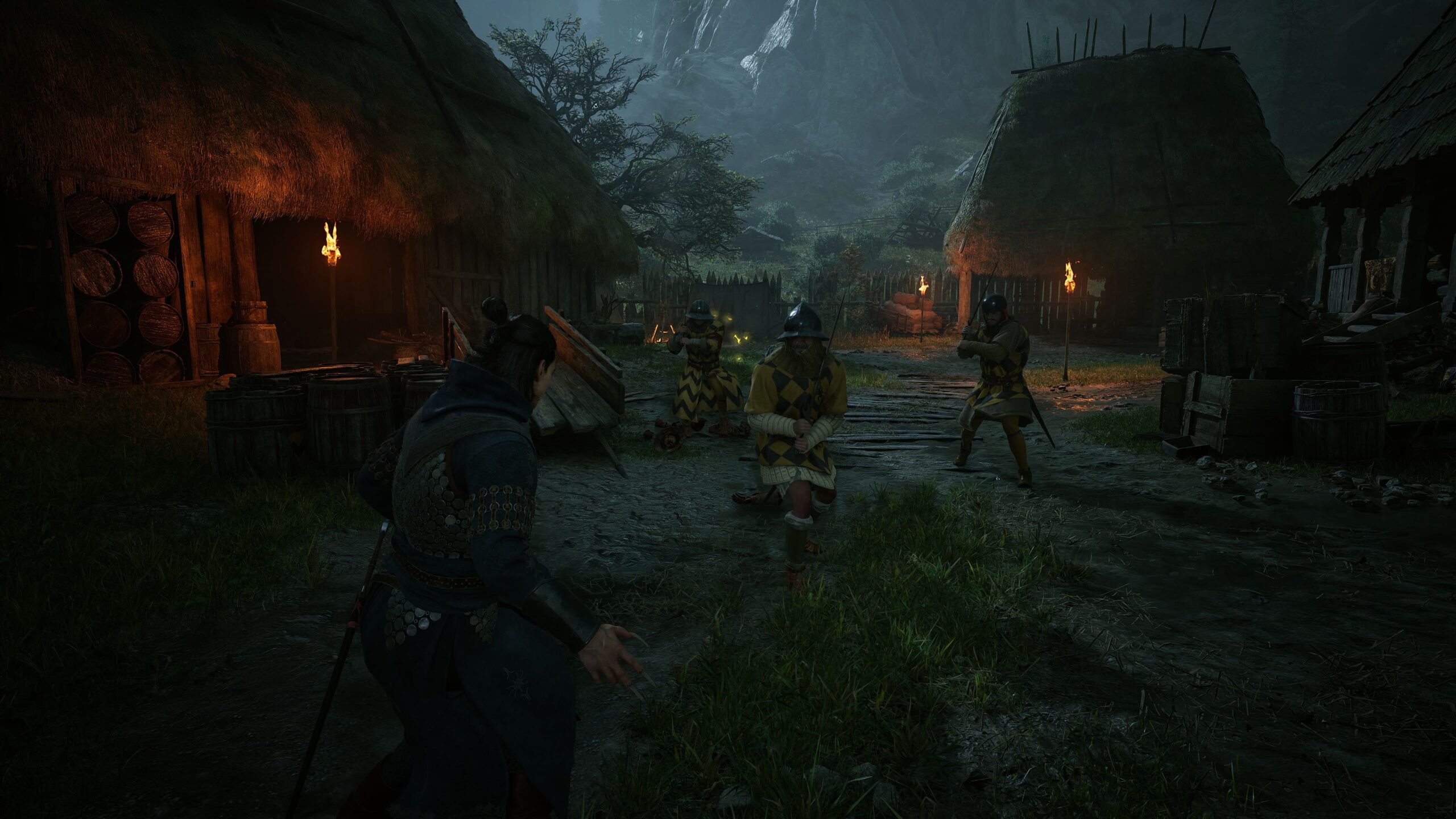
Even when multiple enemies target Coen at the same time, you can still keep track of what’s happening. Another factor is that enemies don’t immediately swarm our protagonist—they usually attack one at a time. Every now and then, attacks may happen simultaneously, but even that isn’t a problem in and of itself. And once you get the hang of the combat system, fighting becomes a breeze.
Variety Between Day and Night
Another aspect that benefits the combat system is the fact that Coen plays similarly during the day and at night, yet differently enough. After all, during the evening and nighttime hours, we gain access to the vampire abilities of our favorite character from Laslea. This means not only that we can sink our fangs into our enemies’ necks, but also that our fingernails are long enough to function as claws—and thus as weapons. As a result, the change in time of day isn’t just a game mechanic designed to encourage us to play through the game multiple times; it also provides meaningful variety in gameplay.
This variety also stems from the fact that, as a vampire, we can move differently than in human form. Running and sprinting are still possible, of course, but we also gain a wolf form (not a bat!) and the Shadow Step, which acts as a kind of teleportation. This allows us to bridge chasms or climb rooftops with ease. In addition, as a vampire, Coen can run along walls and ceilings—at least as long as his stamina holds out.
Language & Technology
We were also impressed by the well-executed English voice acting for all monologues and dialogues. This is still something special for a debut title, especially since it’s always a matter of budget for text-heavy games. Bandai Namco did the right thing by allocating the funds for this!
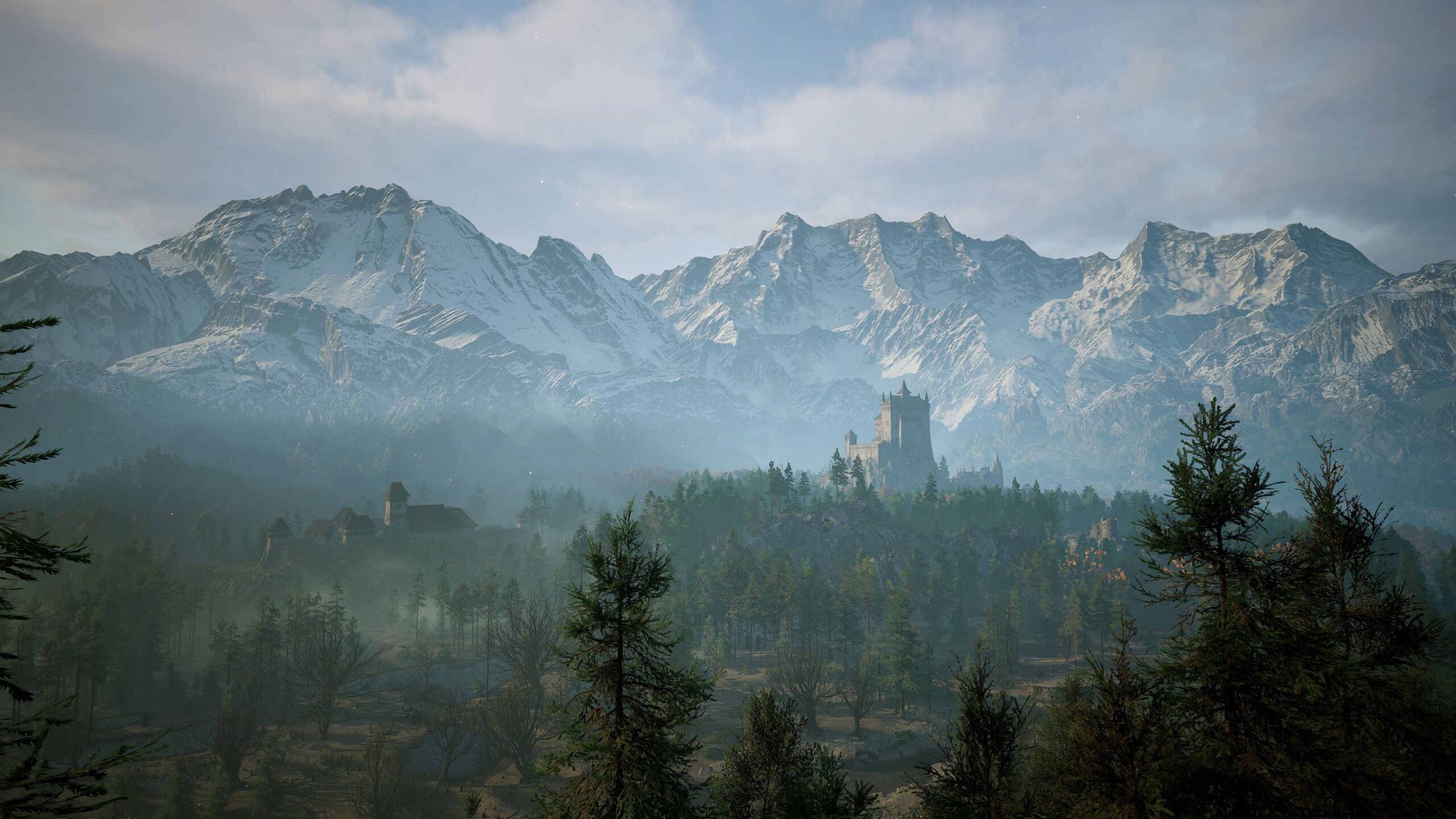
Technically speaking, the game is also impressive. Throughout the entire playthrough, there were no major issues that would have hindered gameplay. Performance remained consistently stable and solid, with no crashes.

Conclusion
“I was a bit skeptical at first about the time mechanics in *The Blood of Dawnwalker*, but after the first few hours of gameplay, that skepticism quickly faded. I realized that I had significantly more time at my disposal than I initially thought. Besides, the time limit only applies to saving Coen’s family. If we exceed the time limit, we can still complete all the other tasks in the world—it’s just that our family is done for. This definitely allowed me to immerse myself more fully in the game and tackle the countless tasks awaiting Coen and me.
So far, *Blood of Dawnwalker* is definitely one of my gaming highlights. The combat system—which takes a little getting used to but is then more than motivating when combined with the various abilities you can unlock—is truly special. It’s also great that the gameplay changes a bit at night, making it more varied! While the side missions won’t win any prizes for innovation, they still managed to keep me entertained time and again. I can’t recommend this game highly enough to anyone who likes RPGs, and I’m very excited to see what else Rebel Wolves will bring out of this franchise in the future.“
- Story/Atmosphere: 80/100
- Game Design: 90/100
- Balance: 80/100
- Scope: 90/100
- Presentation: 90/100