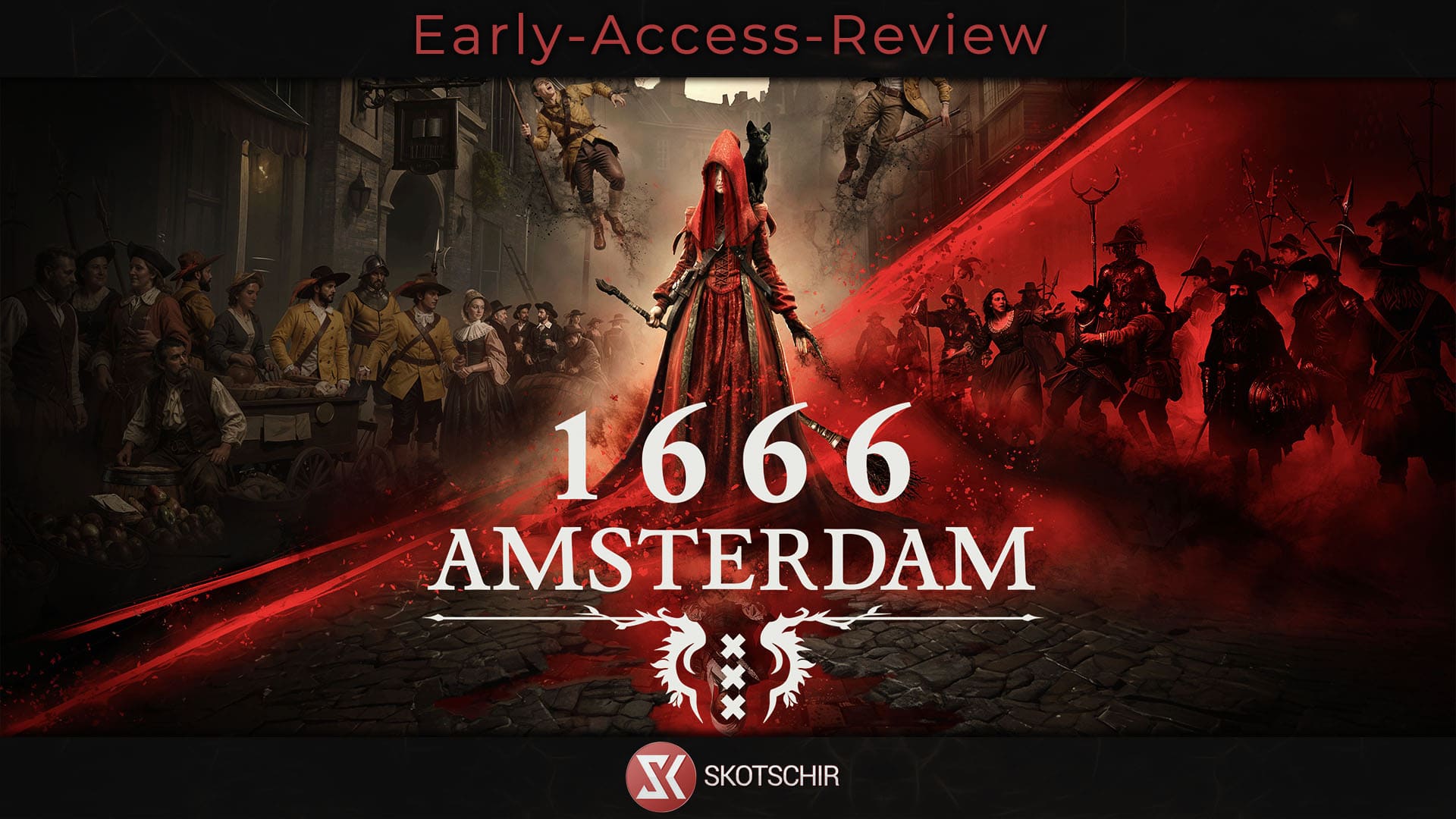
1666: Amsterdam comes from the mind of Patrice Désilets, the creator of Assassin’s Creed – that has raised high expectations. Justified?
“1666: Amsterdam”—the latest project from Patrice Désilets—was officially announced at the 2026 Summer Game Fest. Désilets, the original creator of *Assassin’s Creed* (who left Ubisoft some time ago), has spent a total of 16 years working on this project, which finally entered Early Access this year. An initial demo was made available during the Summer Game Fest, though it is no longer accessible; even then, the feedback was somewhat mixed. Currently, the Early Access version holds an approval rating of around 60% on Steam, categorizing it as “Mixed.” We’ve taken a look at the title to see where the primary criticisms lie—and why it might actually be the perfect example of an Early Access game.
Past, Present, and Beyond
In “1666: Amsterdam”, we follow the story of Noa Brooklyn, an apprentice apothecary in Amsterdam during the Dutch Golden Age. Beyond her apprenticeship, Brooklyn is a secret member of the Zaindaris—a coven of witches. In December 1665—the year before the game begins—she undergoes an initiation and is chosen to become a “Collector.” During this ceremony, she selects a black cat as her familiar, gaining the ability to use witchcraft to investigate and study demonic and supernatural entities, known as “Originals.”
The game’s narrative spans three distinct time periods: 1666, 1999, and the present day. In December 1999, Aaron, a university professor in Amsterdam, becomes caught up in an occult ritual. As a result, his consciousness is transported into the body of Noa’s feline companion—back in the past. Meanwhile, in the present, Aaron’s daughter, Clio, investigates documents linked to Noa, uncovering a connection between her father and the witch from the past that ties all three eras together.
Dance Instead of Combat
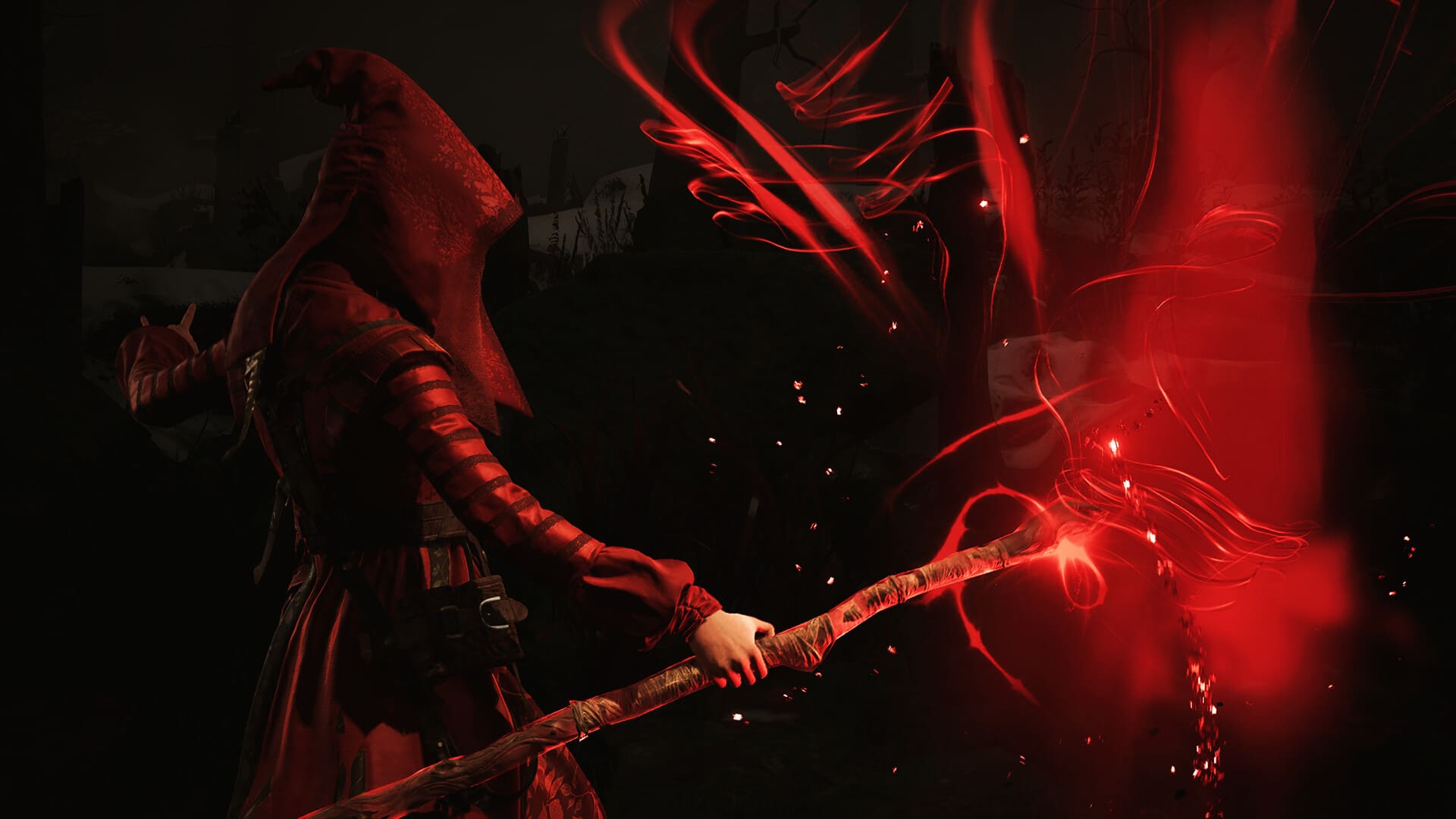
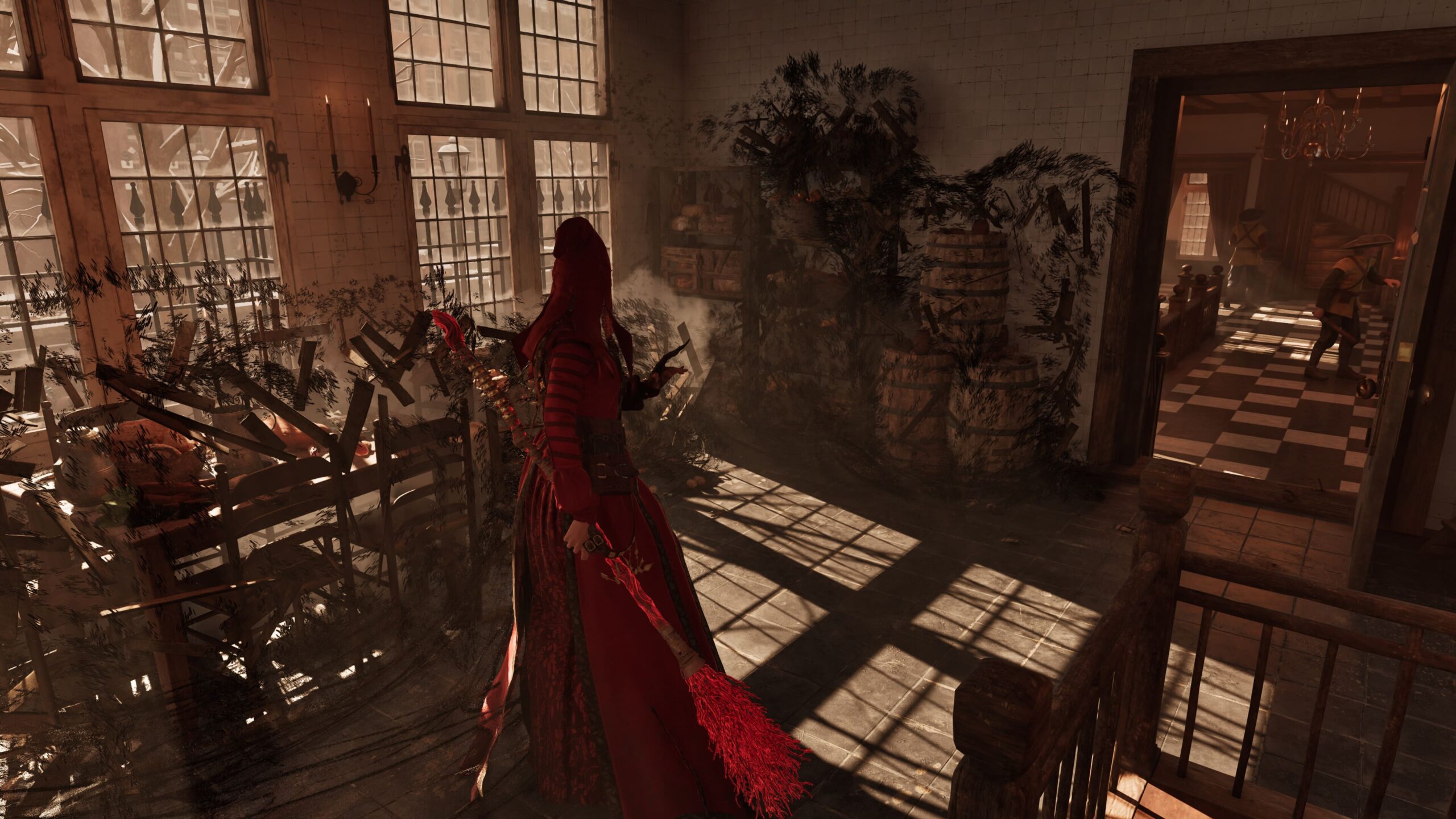
The combat system might well be the game’s strongest element. We move about wielding a broom, thrashing incoming enemies with a swift, dance-like grace. The broom serves not as a means of transport, but as a melee weapon capable of striking up to three foes simultaneously. We bring the handle crashing down onto our enemies’ heads before delivering a decisive finisher to put an end to them. Notably, there is no blocking or parrying mechanic; instead, the focus is entirely on evasion—a deliberate design choice, according to Désilets.
In “1666: Amsterdam”, combat is intended to feel less like a conventional encounter and more like a “dance.” This takes some getting used to, as blocking and parrying are typically the standard in games of this type. Over time, however, one adapts—as one also does to the unconventional button layout (using ‘A’ instead of ‘B’). Once you’ve settled in, Désilets’ vision of dance-like combat makes perfect sense.
Similar, Yet Distinct
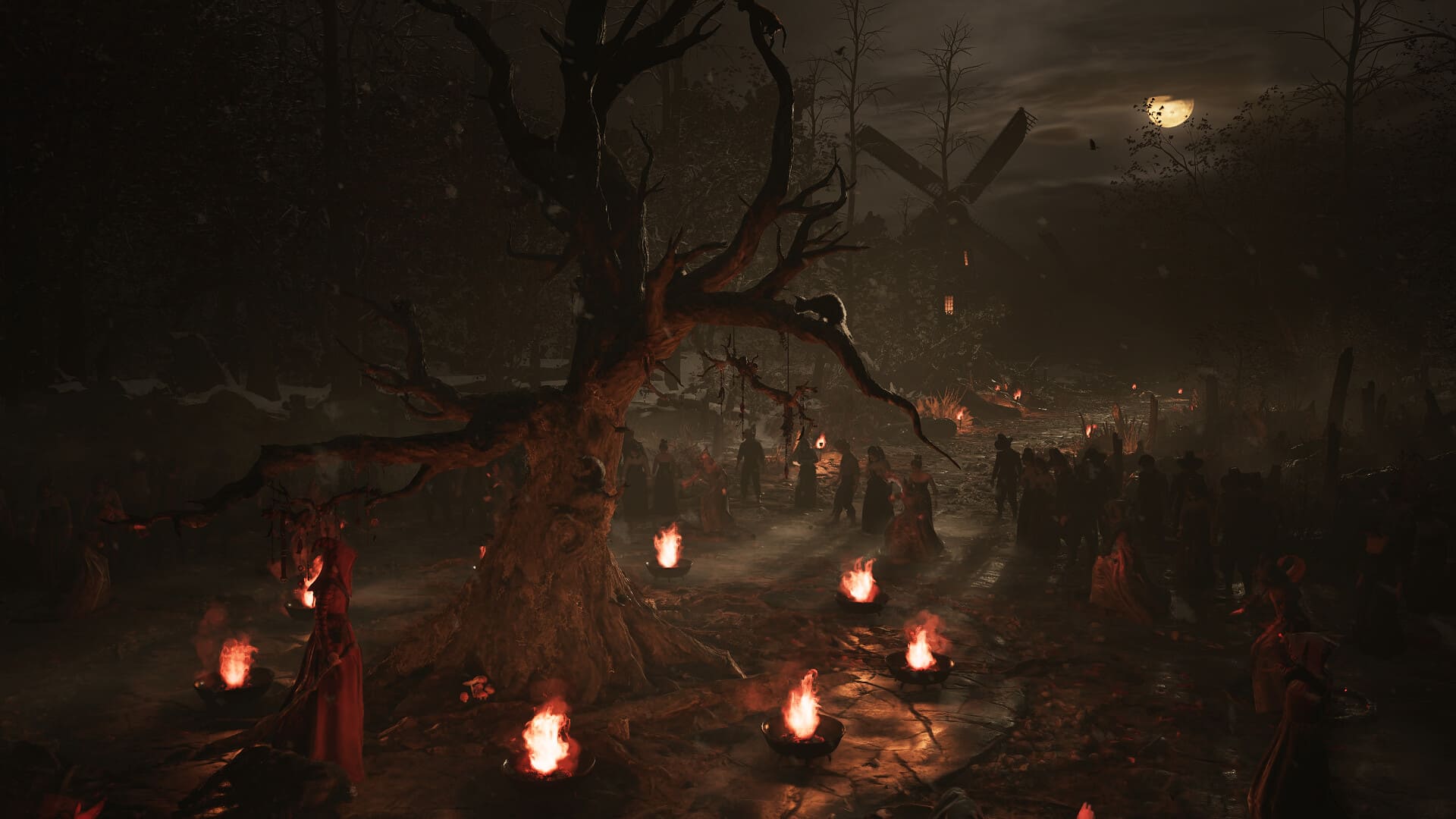
There are frequent reminders of “Assassin’s Creed”—which, in truth, comes as no surprise. In the present day, Clio sifts through the records of her late father, uncovering an enigmatic connection between him and Noa—a premise that echoes the modern-day “Animus” sequences found in the Ubisoft franchise. Yet, despite these parallels, the dark atmosphere of this latest project from the creator of “Assassin’s Creed” stands entirely on its own. The game masterfully captures the medieval-gothic aesthetic of 1666 Amsterdam, while the level design and well-conceived gameplay mechanics are equally impressive.
For we must carefully consider whether to execute the strategic shift between our human form and our hidden, true form. After all, the Netherlands is plagued by witch trials during this period, and even the slightest peculiarity could be enough to see us sent to the stake. Changing forms is much like an assassin pulling their hood up or down; if we wish to gather information, it is best to remain in the shadows. Should we draw too much attention to ourselves, witch hunters will appear—and they are, as is well known, not to be trifled with.
Lux and Nux
It is also important to decide which battles to engage in and which to avoid. Noa can only unleash her full power during a full moon—an event known as an “Esbat.” Until then, the goal is to move through the world as inconspicuously as possible while gathering information on the whereabouts of the “Originals.” To do this, we must uncover their true names and track down the pacts each individual has entered into. In essence, we are laying the groundwork for a carefully planned magical assassination.
Should we find ourselves in a fight, we can cast spells that consume one of two types of magical essence. First, there is the blood-red “Lux” essence, which allows us to enchant elements within the game world. Then there is “Nux” essence—dark and rendered in black and white—which is used in combat. We can replenish this, for instance, by perfectly executing a quick-time event (QTE). In the HUD, Nux essence is even depicted as a projectile, reinforcing Désilets’ description of Nux as a ranged weapon. Those who fail to master the QTEs perfectly will need to find an alternative, as Nux is rarely encountered out in the game world.
Abundant Details
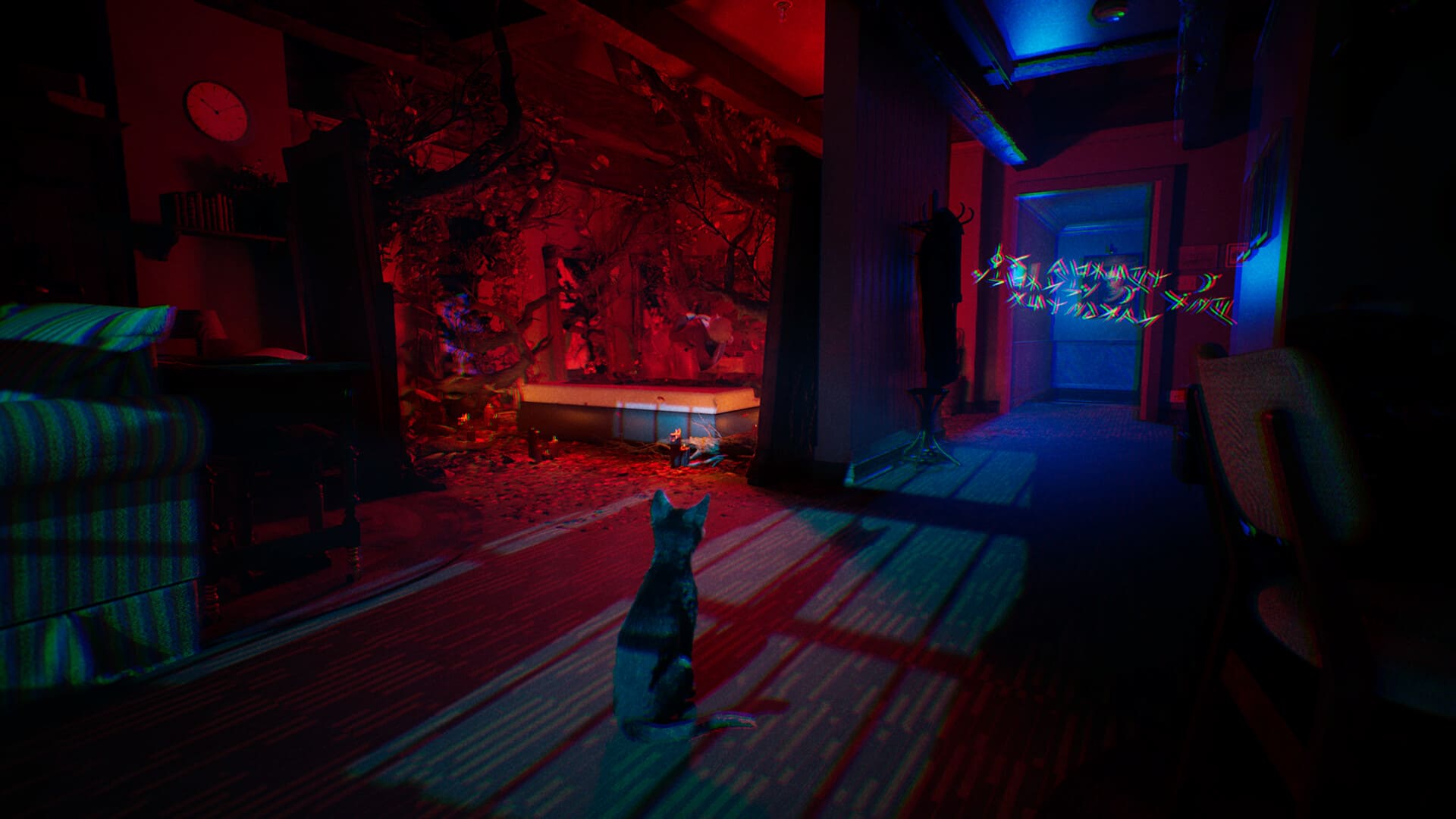
“Lux,” by contrast, can be found throughout the game world of Amsterdam—a reflection of the deep, intrinsic link between life and death. Every corpse encountered along the way—whether human or animal—leaves behind “Lux essence.” This proves particularly useful, as Aaron, our “animal” companion, can convert Lux into “Nux” (and vice versa), allowing Noa to absorb the energy.
Beyond a magic system perfectly tailored to the game’s themes, the individual details have also been chosen with great intent. Noa’s vibrant red outfit, paired with a veiled headdress, creates a striking contrast against her otherwise modest, villager-like attire. This principle extends beyond our protagonist to the city itself: the various districts are distinct from one another, and, in theory, every building can be entered. Some, however, remain inaccessible until opened with Aaron’s help—he can scratch NPCs, thereby taking control of them.
Ambivalence
Another positive surprise in “1666: Amsterdam” is the roguelike system, which allows us to unlock various abilities. The Coven has placed ornate jewelry boxes throughout the city; interacting with one presents a choice of three different skills. Selecting one grants a magnificent gemstone or an adornment, which becomes visible on Noa herself once she shifts into her arcane form. However, should Noa die during a full moon, the entire night must be replayed from the beginning—and all abilities collected up to that point are lost. Whether this mechanic will remain in place for the full release remains to be seen; as it stands, having to start over from scratch is quite frustrating.
Speaking of frustration, the title is currently in an ambivalent state. On one hand, it is bursting with detail, strong ideas, and promising concepts. On the other, it falters in those very areas—compounded by several bugs that can lead to crashes or simply cause annoyance. Navigating the city and determining the location of the next objective is often a significant challenge. Furthermore, the combat system can prove quite frustrating if it doesn’t “click” for the player. That said, the foundation is already very solid, and—thanks to the Early Access model—there is plenty of room for improvement.
Conclusion
“1666: Amsterdam explores some interesting concepts and parallels to “Assassin’s Creed”—moments that occasionally drew an “aha!” from me. These aren’t necessarily intentional allusions or references, but rather conceptual parallels, expansions of existing ideas, or simply fitting elements that brought the series to mind. I frequently encountered highly detailed and creative approaches to game design, though these still require some fine-tuning throughout the Early Access phase. This includes issues like the sometimes poor navigation within the city, or frustrating mechanics—such as having to repeat the “full moon” sequence if you happen to meet your virtual end during that phase. The technical state of the game, in particular, definitely needs improvement. Those who enjoy supporting Early Access titles might want to take a look now and contribute to development through their feedback; everyone else should probably wait for a few more updates.“
The review key was kindly provided to us by the publisher.