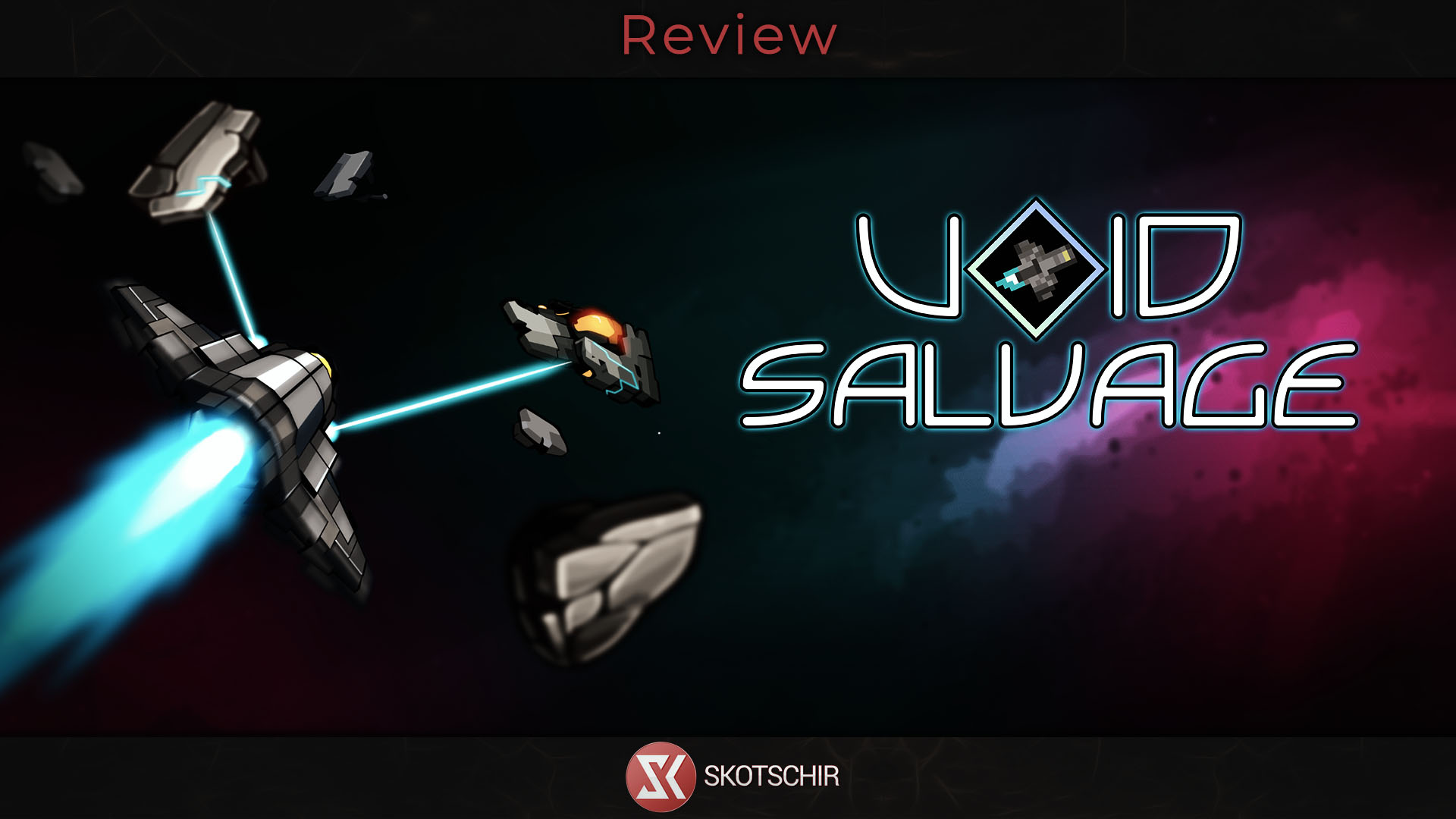
Void Salvage is a small indie roguelite/like game that focuses primarily on salvaging wrecks and fighting evil.
Void Salvage is an indie game developed and published by myradann. It was released on Steam on August 11, 2026, and falls into the roguelite/like genre. Most of the game happens automatically—resource gathering and combat both proceed on their own. As players, we therefore need to come up with a good strategy and commit to a (hopefully effective) build. Otherwise, we gradually explore interesting locations and collect materials for upgrades. We took a look at the game and will let you know whether it’s worth checking out.
Complex or simple?
At first glance, Void Salvage seems like a complex game, but it becomes simpler and more accessible the more you play. This is especially true because, over time, the various possible builds become clearer, and you learn what works best with what. These include upgrades for drones, augmentations, and weapons. There’s something for every playstyle. This is also because the difficulty level can be adjusted to your liking.
There isn’t really much to say about the story at this point. While there are a few small story elements that pop up every now and then in the form of text logs when starting a new round, they don’t really have much substance. These logs basically just state that we don’t know how we’re still alive. As the player, we’re a lone pilot zooming through space in a ship, collecting scrap and shooting down enemies along the way.
Resources, Combat, the System, and Core Upgrades
When starting a new save file, we can choose from three different modes to play through it. The options are “Incremental,” “Progressive,” and “Roguelike.” “Incremental” is a kind of easy mode that features relatively mild penalties and makes exploring the game a more relaxed experience. However, this also makes progress almost guaranteed—which, in a roguelike, might not be what most players are looking for. The “Roguelike” mode, on the other hand, is the exact opposite. In the middle is the so-called “Progressive” mode, which offers a good mix of the two extremes. Instead of “Progressive,” you could also call it “Roguelite.” This mode isn’t quite as unforgiving and was our go-to choice most of the time. Ultimately, of course, you can decide for yourself how challenging you want the game to be.
Resources, combat, the system, and core upgrades are the four key factors in the game that matter in every round. Resources are among the most important, as they form the basis for everything else and consist of experience points, credits, and fuel. Most actions in the game, such as collecting scrap or defeating enemies, yield experience points. We can then redeem these XP for core upgrades, which we’ll come back to later.
Resources
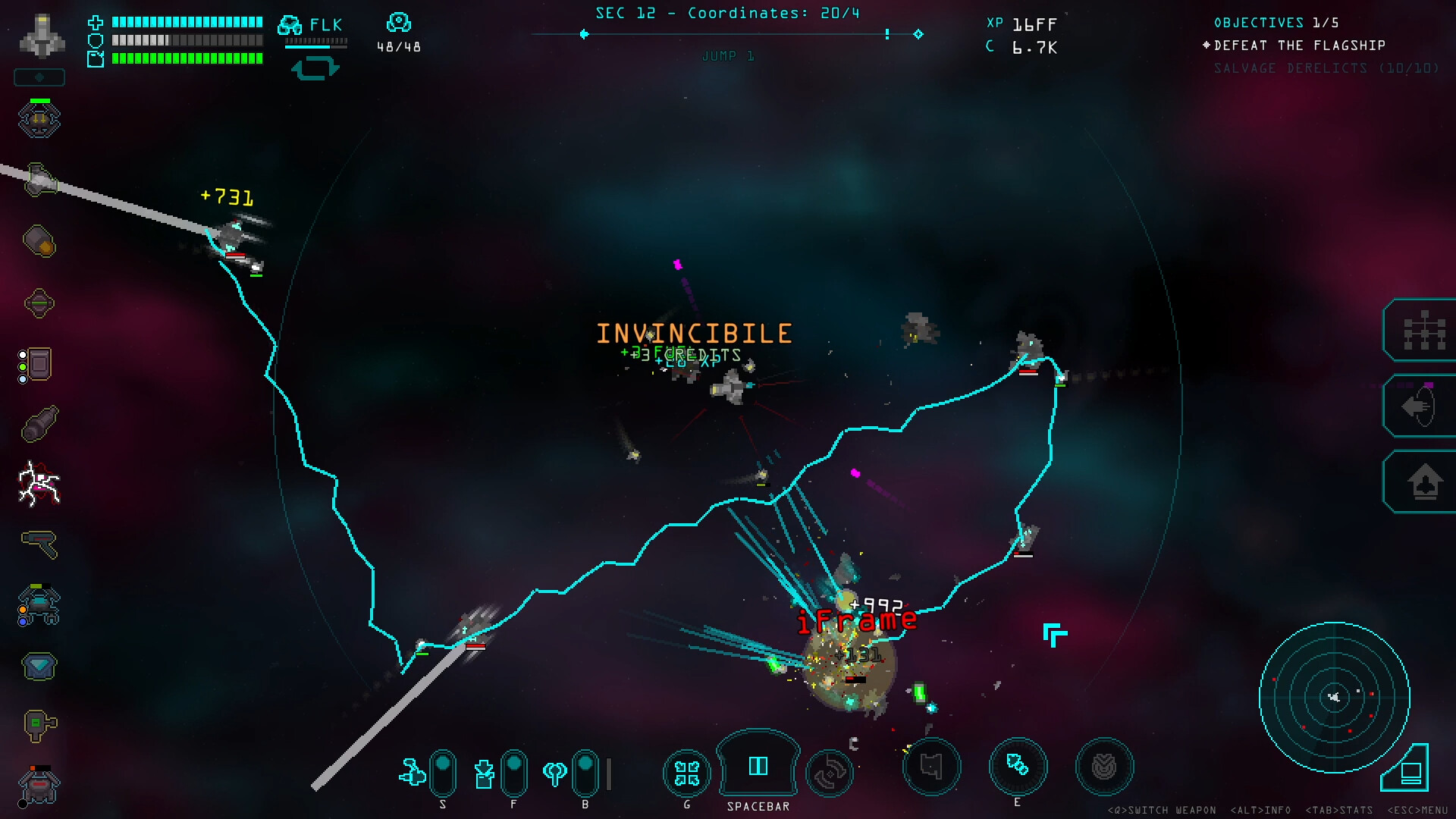
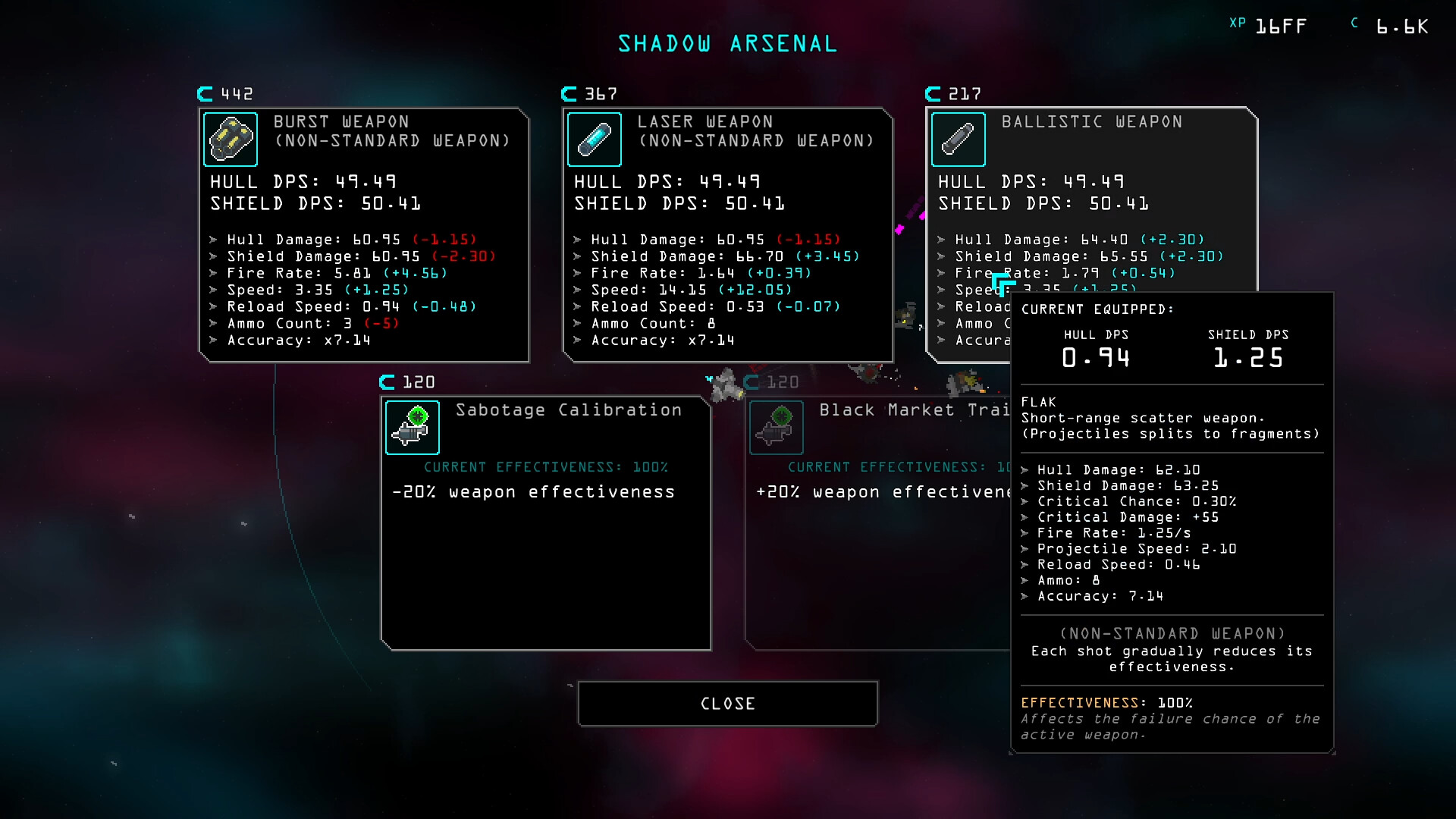
In Void Salvage, credits are the currency we can spend to purchase various upgrades. This naturally includes upgrades for our ship. Credits can also be used to repair the ship if it has sustained damage, as well as to buy XP or fuel. The latter is essential for making progress. Similar to FTL, we don’t move freely through space but instead travel from point to point in orbit—and that, of course, costs fuel. After we’ve visited and checked off several interesting points on the map, a boss area opens up.
Battles in the game take place automatically, which means our ship fires at enemies on its own. The only way we can influence the outcome is by specifying which enemy ship should be attacked first. Most ships have a shield that must be bypassed first. Most of the time, we’ll get caught up in battles at various locations, usually fighting between one and six enemies. For victories, we receive scrap, money, and fuel, as well as specific loot such as augmentations, modules, or sockets.
Upgrades
If we happen to die, we’ll have to start over from the beginning—that is, in the first sector. But before we start over, we can choose a bonus, which consists of either a module, a drone, or a general upgrade. There are also weapons and sockets. The selection should be made carefully, because we have limited space for these types of bonuses—which can be increased through core upgrades, but still. If we ever find something better, we can at least choose to replace a current bonus with it.
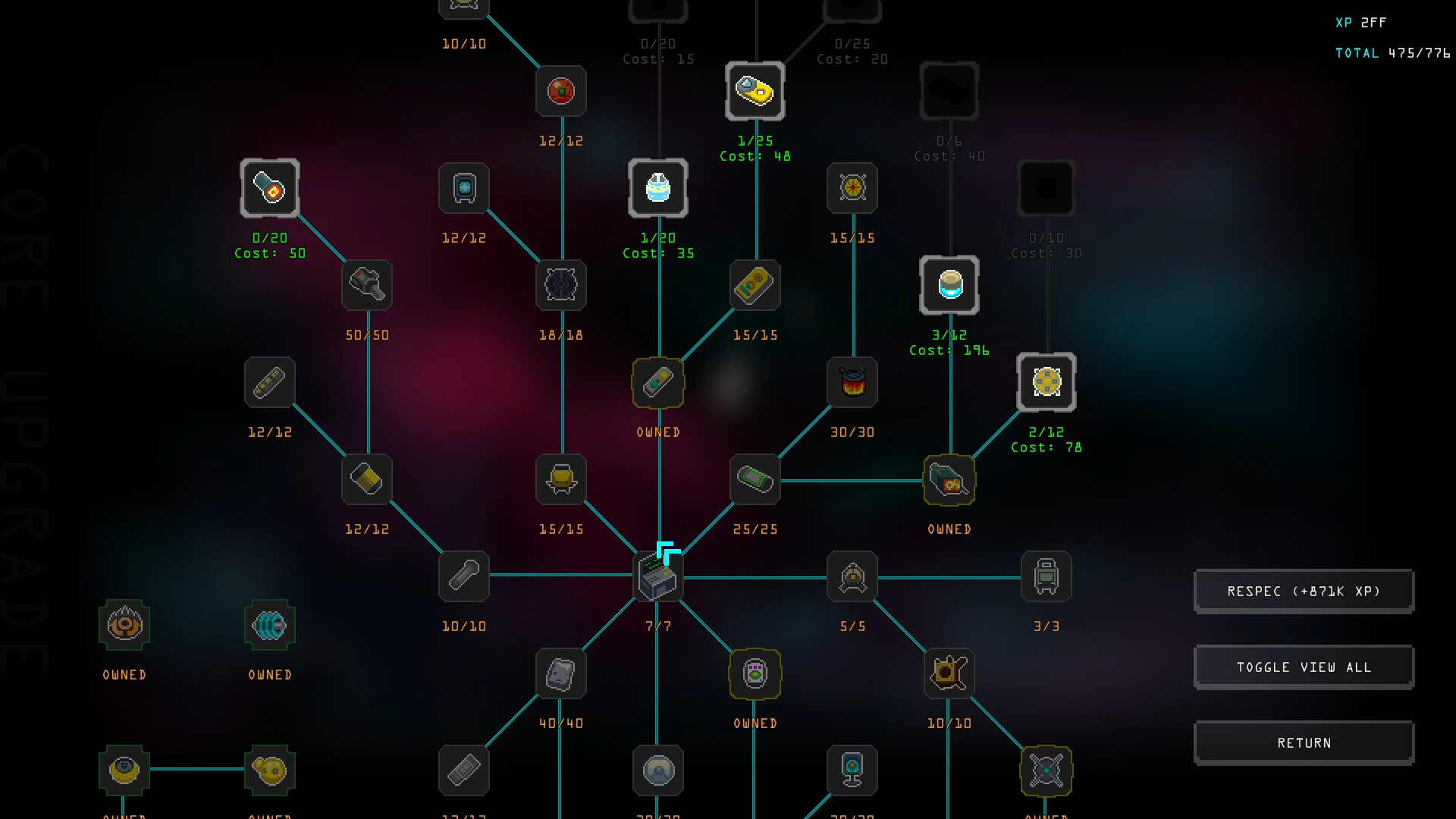
Drones circle the ship and can take on various tasks—including fighting, strengthening defenses, or repairing the hull. Others, in turn, can distract enemies or gather resources. If the drones take too much damage from enemies, they are destroyed. Augments and modules are similar but enhance different aspects of the ship. Augments handle the weapons, while modules focus more on defense. Of course, there are also weapons, which come in different types, and we can have a total of two of them. Last but not least, the core upgrades are structured like a skill tree with various branches.

Conclusion
“Overall, Void Salvage is an interesting indie roguelike that’s definitely entertaining for a few hours. In the long run, however, the game doesn’t really motivate me to keep playing. What’s definitely nice, though, is the ability to adjust the difficulty level to your own preferences—namely, the choice between the three modes: ”Incremental,” “Progressive,” and “Roguelike.” It’s also motivating to customize your ship with various upgrades during each playthrough, allowing you to discover and experiment with different builds. If you enjoy this type of game, you should definitely give it a try. Everyone else will likely be less satisfied with the game.“