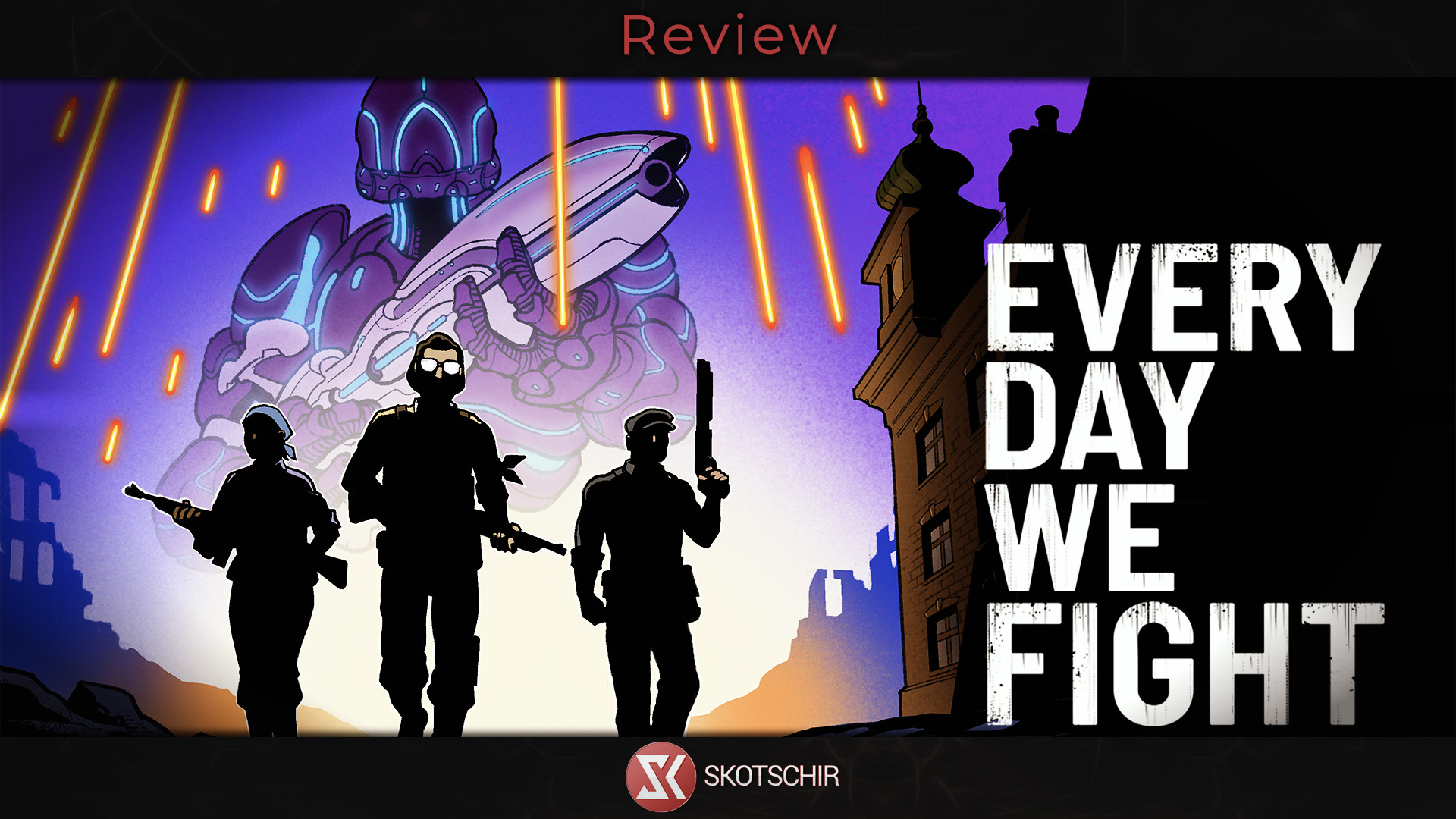
In “Every Day We Fight” we have to defeat mysterious aliens in turn-based battles and find a solution for the time loop we’re caught in.
With “Every Day We Fight,” Canadian studio Signal Space Lab combines real-time exploration with a turn-based combat system. So similar to what was recently the case with Star Wars: Zero Company. Nevertheless, the title has existed for a long time, as it came out of the early access phase at the end of October 2026 and is now available in version 1.0. This isn’t just another “XCOM-like”, but rather comes with its own twist – which comes into play especially in the fights. But more on that in a moment. We were allowed to take a look at the title and tell you more about the game in our test.
Aliens and time loops
In “Every Day We Fight” a mysterious alien invasion haunts humanity. We belong to a small group of freedom fighters who, however, have experienced something special. Because time seems to have stood still for everyone – except for our group. So it’s up to us to find out what this is all about and how this stasis can end. What’s more, we’re caught in a seemingly endless time loop – so we first have to figure out how to break out of it.
Our group consists of the three resistance fighters – called Thorns – Dylan, Leo and Vivian, who each start with a different weapon. At the beginning, Dylan has a shotgun, Leo has an assault rifle, and Vivian has a rifle. At the beginning of the game we have to fight a group of Rifters – that’s what the Thorns call the strange aliens, who are often reminiscent of robots. As we advance as a group to a parking lot, we are suddenly sent back in time by a special alien. When we go back to the parking lot and fight him there, he says as he dies that we have “defeated him again”, but in doing so we have overcome him for the first time. Suddenly the group is back in the parking lot, seemingly in the past – another time loop?
Sewer Hub
So we start the journey and have to find out what it is all about. There are also cutscenes that come into play again and again, which come in a suitable, drawn style and always give us information about what is currently happening or what will happen next. The game’s soundtrack is available in English and French, but the accompanying texts are available in German. For an indie game, dubbing is often something that can be very expensive, so we understand that the two most important languages for the Canadian studio have been covered here.
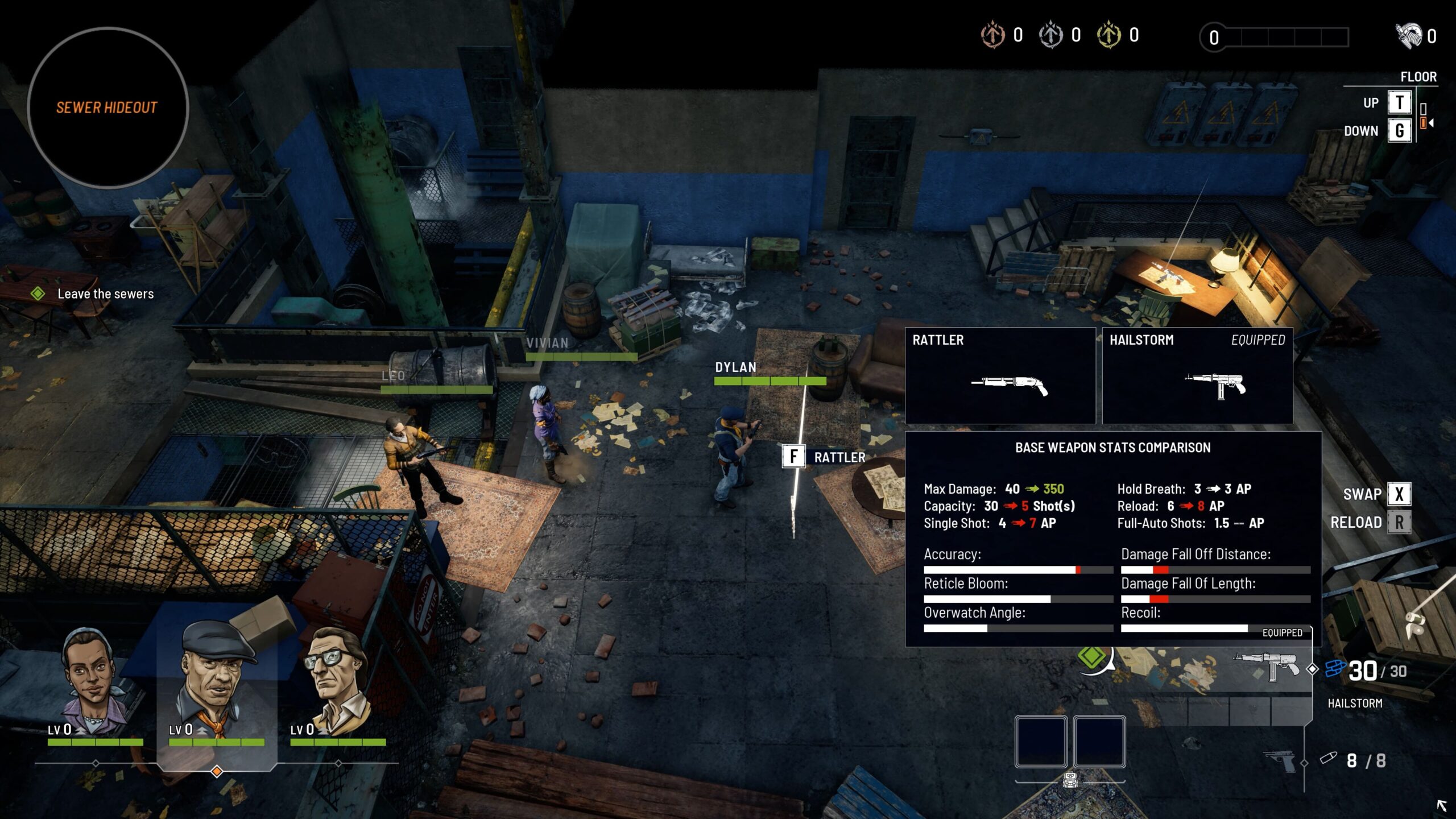
But back to our resistance group. After being sent back in time in the parking lot, we first go back to our hub in the sewers to collect ourselves. Once there, we make a plan for the next step of our mission. In this hub we can also stock up on new equipment such as weapons or consumables such as bandages or grenades. New and randomly selected items appear every time you visit the hub. Dylan, Leo and Vivian aren’t tied to a specific type of weapon either, but can happily switch between them when we find a better one. Weapons can also be modified and improved in various areas.
Metroidvania Style
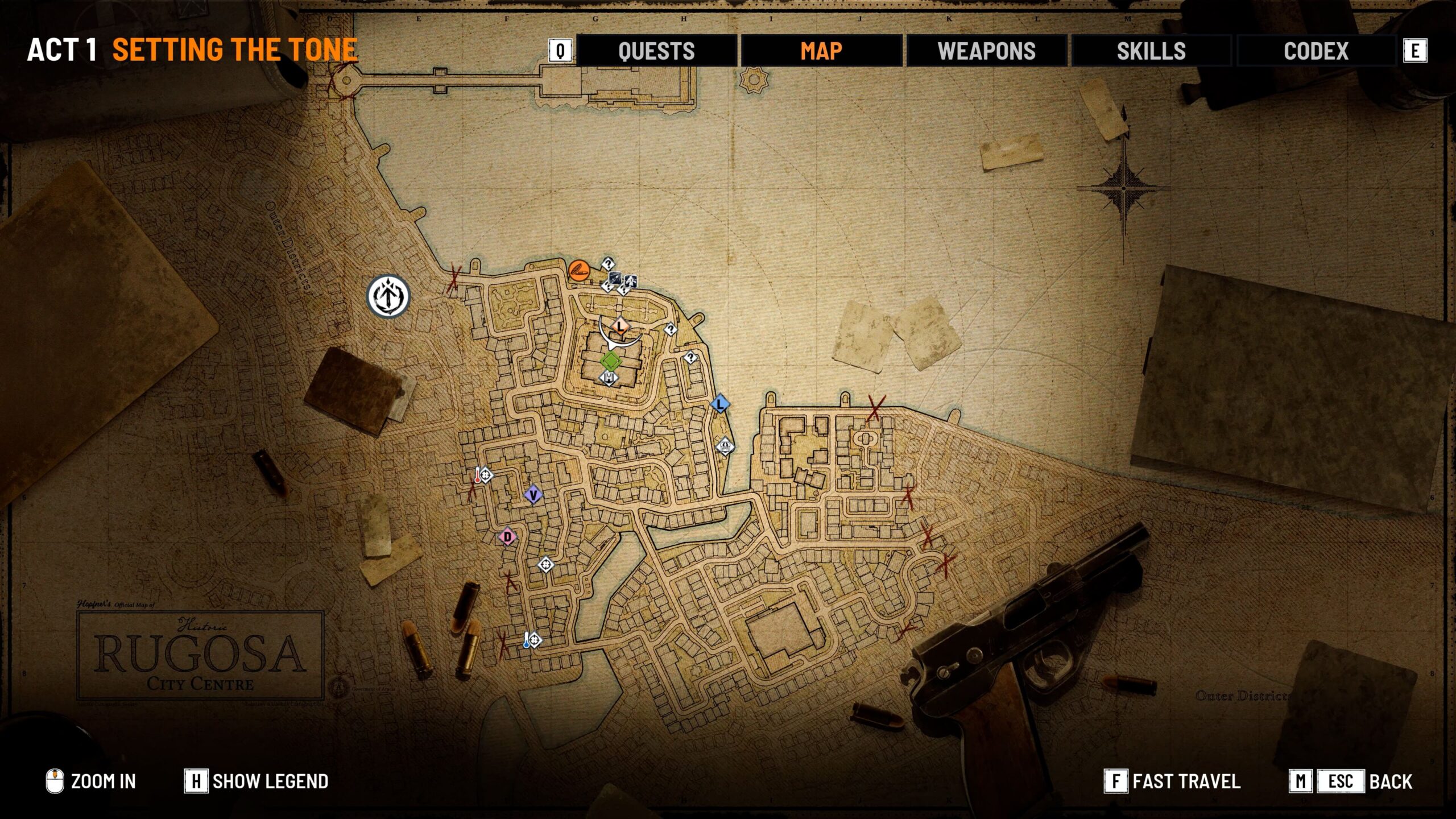
As soon as we want to leave the sewers, an overview map of the city opens where we can see a few possible missions and interesting places that we can then visit. But we can only leave the sewers at certain points and then have to walk to the respective places. In the city we keep seeing places that we have to return to later, for example because they are “overgrown” with a light blue ore, called Exilium. To do this, as part of the main quest, we first have to steal a device with which we can get to the objects underneath. So it’s worth looking around and exploring the city – even if we have to come back later, Metroidvania style.
There is also a “Heat” level in the city that increases after battles. If this reaches the next level, all subsequent fights become more difficult and there are more enemies to fight. This can definitely be crucial, because the fights in the game should not be underestimated, despite the fact that we played on a rather “medium” difficulty level, which was already called “Hard”.
Real time and turn based
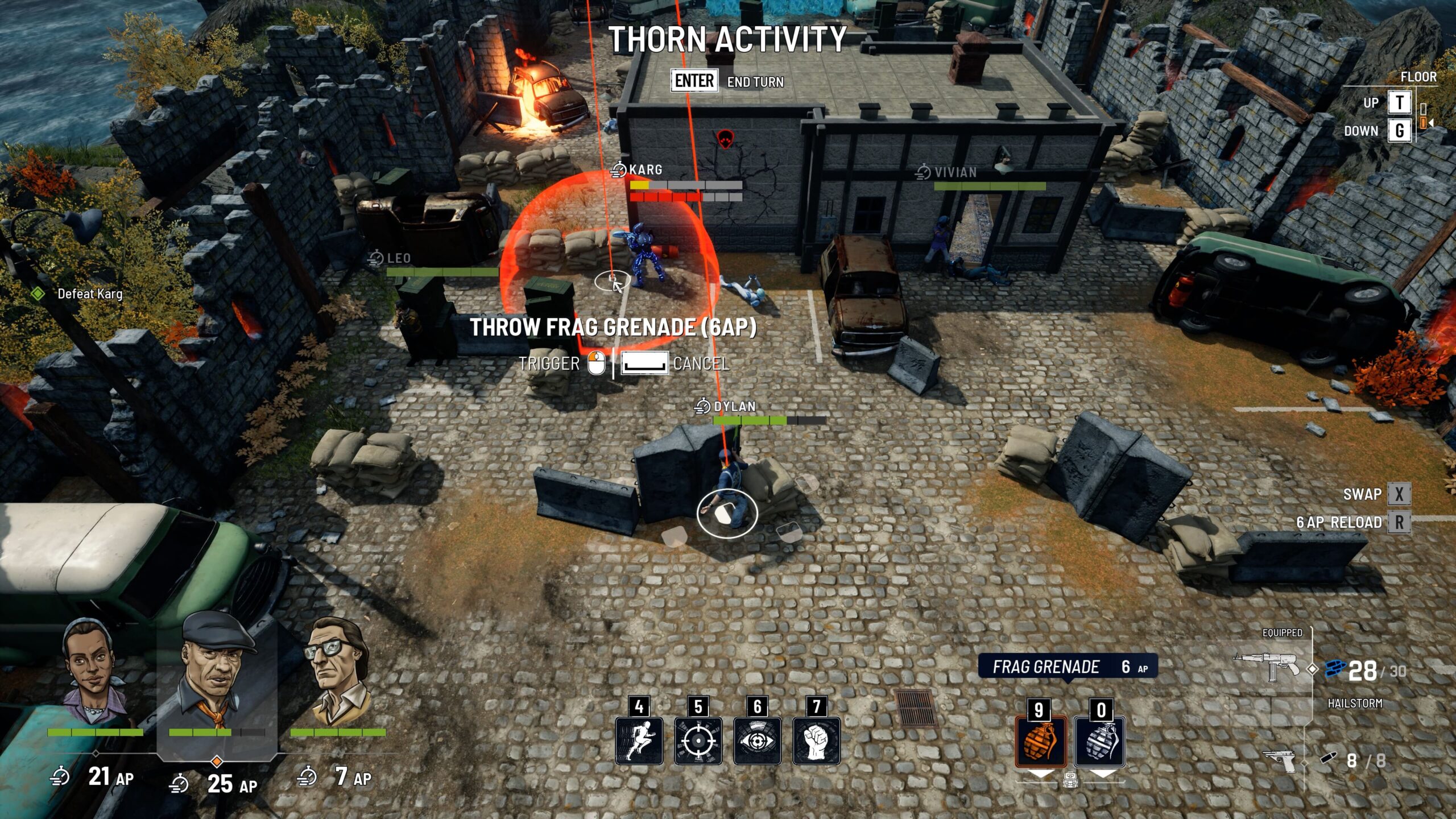
Speaking of combat—in “Every Day We Fight,” this is naturally one of the most significant activities you can—and frequently must—engage in. While movement across the map takes place in real-time, conflicts unfold in a turn-based format. There is no interleaved turn order; instead, the sequence is strictly defined: your group acts first, followed by all the enemies in succession. As is often the case, this approach has both its advantages and drawbacks. During your turn, you can perform various actions, such as moving, reloading, monitoring an area, or, of course, opening fire.
Each action consumes a specific number of action points, with every character having a limited pool available per round. Consequently, you must carefully consider your next move and whether a better alternative might exist—after all, you certainly don’t want any of your characters to meet an untimely end. That is often easier said than done, as the mysterious aliens consistently put up a fierce fight, occasionally leaving us feeling truly desperate.
Come on, react!
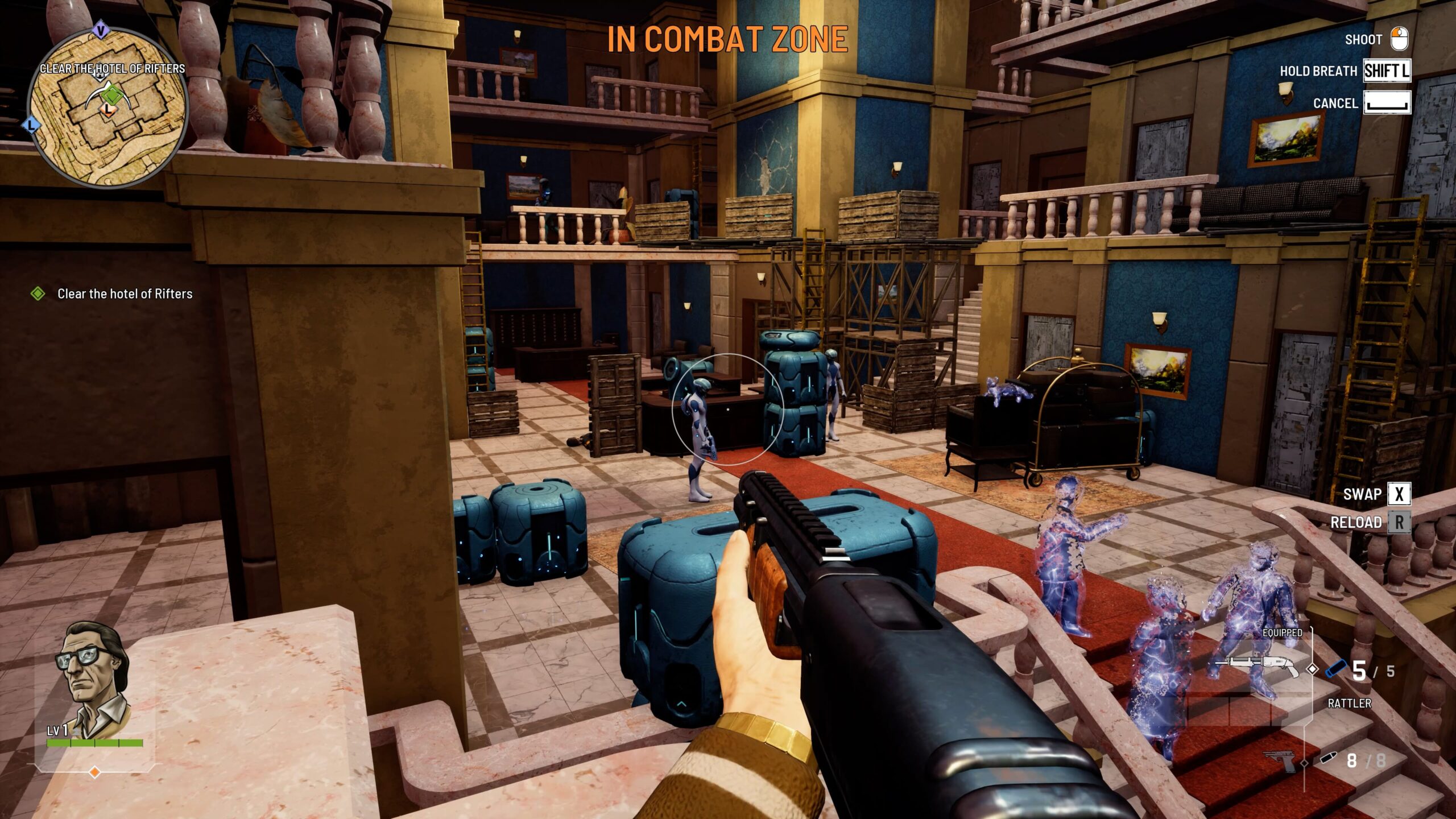
Now, let’s look at the unique feature that defines this title. When you want to attack an enemy, you don’t simply select an “attack” action and then pick your target. Instead, you press the right mouse button, take manual aim from a first-person perspective, and fire. This adds an intriguing layer to combat: if you miss, it’s largely your own fault—unlike in other games of this genre, where a miss might simply be the result of a 95% hit-chance calculation. Furthermore, if you have a character monitoring a specific area and an enemy enters it, you can—and must—manually operate the weapons yourself.
Another key feature is the “reaction” system, which allows your characters to respond to specific events. These function much like the reactions found in *Dungeons & Dragons*; in that tabletop system, reactions are triggered in situations such as an opponent moving out of your attack range or an incoming attack that you wish to defend against. *Every Day We Fight* employs a similar mechanic. For instance, if an enemy throws a grenade that lands near one of your characters, you can trigger a reaction to move out of the blast radius and into cover. This introduces yet another tactical dimension to the gameplay.
Even while moving through the world in real-time, you can enter “aim” mode and fire at any moment. This isn’t just a gimmick—it’s genuinely useful in various parts of the game, whether for solving puzzles or clearing a path forward. Often, you’ll find objects in the environment positioned near explosives; by taking a well-aimed shot, you can detonate them to uncover extra loot or blast open a new route. Walls that are already damaged can also be persuaded to open up—by using explosive arguments.
Skills
When we manage to eliminate an opponent—or win an entire battle—our resistance fighters earn experience points. Once they have accumulated enough, they level up and receive ability points, which can then be invested in various skills. Each character has access to three distinct, predefined skill trees, each containing a range of different abilities. One of these, for instance, is the “Utility” tree—focusing on practical, supportive functions.
The first two trees primarily consist of unique traits specific to each character. Vivian, for example, can assist in taking down an enemy if an ally has already brought that opponent’s health down to near zero; alternatively, she can deploy a hologram to distract foes, drawing their attention away from our squad. Dylan, meanwhile, can taunt enemies to focus their aggression on him, or strike an opponent in melee combat should they get too close. Leo, for his part, provides support when an ally is being pinned down by enemy fire.

Conclusion
“”Every Day We Fight” draws its primary inspiration from major titles like XCOM, yet it introduces a unique twist of its own. The narrative is more than just a perfunctory backdrop; it provides a compelling, logical motivation for the resistance group’s actions. The core of the game, however, is the ability to switch to a first-person perspective at any moment, allowing players to aim and fire for themselves. This adds a welcome layer of variety to combat, ensuring that players aren’t solely reliant on percentage-based odds—success or failure rests entirely in your own hands. The characters’ abilities introduce further tactical depth that proves genuinely useful in battle, and the weapon-modding system serves as a solid, well-integrated feature. All in all, we’ve had a great time with the game so far, and we’ll certainly be spending plenty more time playing it.“
- Story/Atmosphere: 70/100
- Game Design: 80/100
- Balance: 80/100
- Scope: 80/100
- Presentation: 70/100
The review key was kindly provided to us by the developer studio.