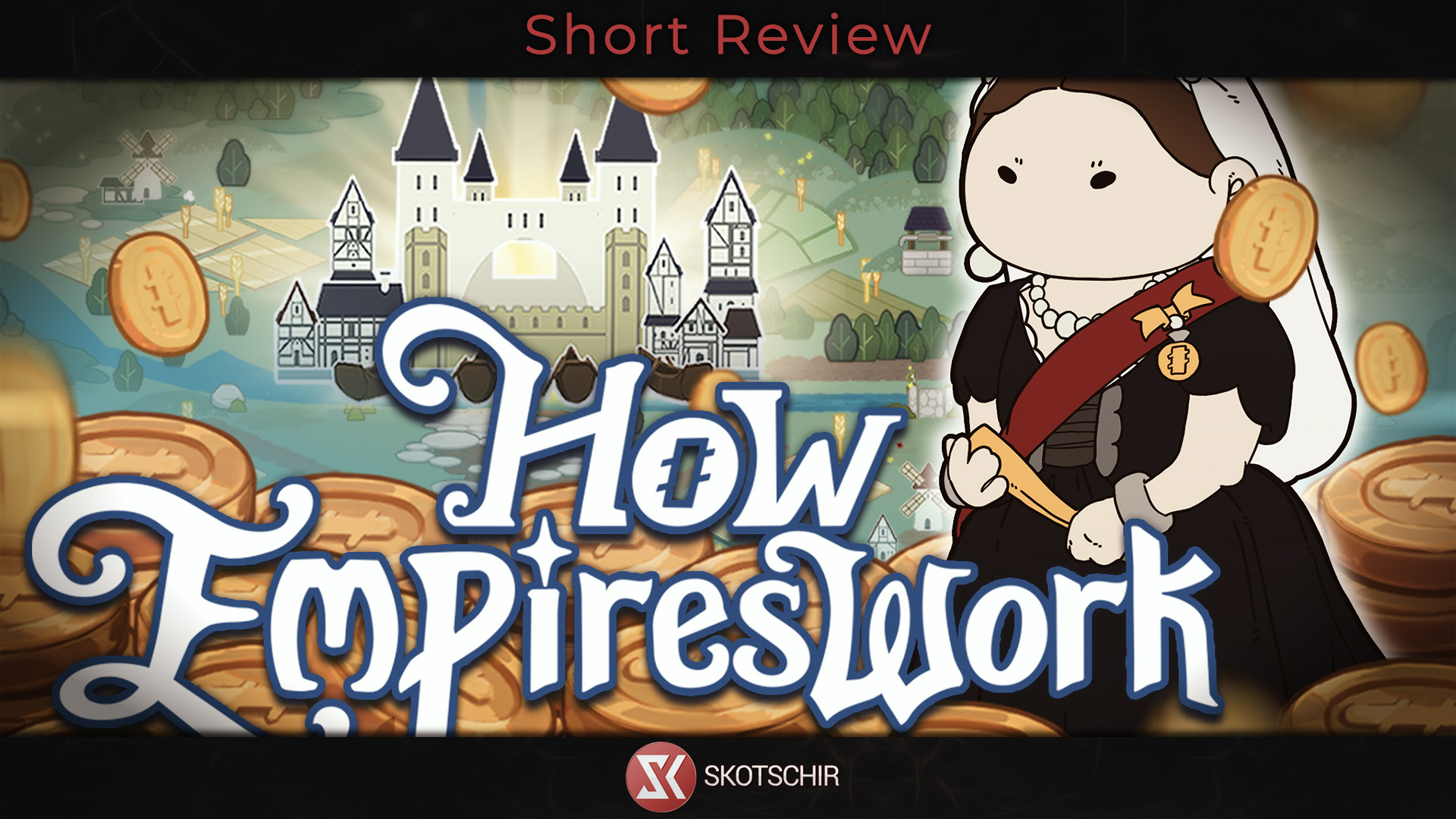
“How Empires Work” is an incremental grand strategy game – but it might not be what you would expect from that description.
Developed by Crow Cottage, “How Empires Work” falls into the “grand strategy” genre—the same category as titles like “Crusader Kings” or “Europa Universalis.” However, this indie game plays quite differently—and, above all, more simply—than the genre’s heavyweights. It employs an incremental, “clicker” style of gameplay: you click away diligently to make progress, and things gradually but surely scale up. Over time, you can automate many tasks, hopefully delivering the results the Empress desires. In this brief review, we’ll take a look at how the game plays.
Taxes and Fighters
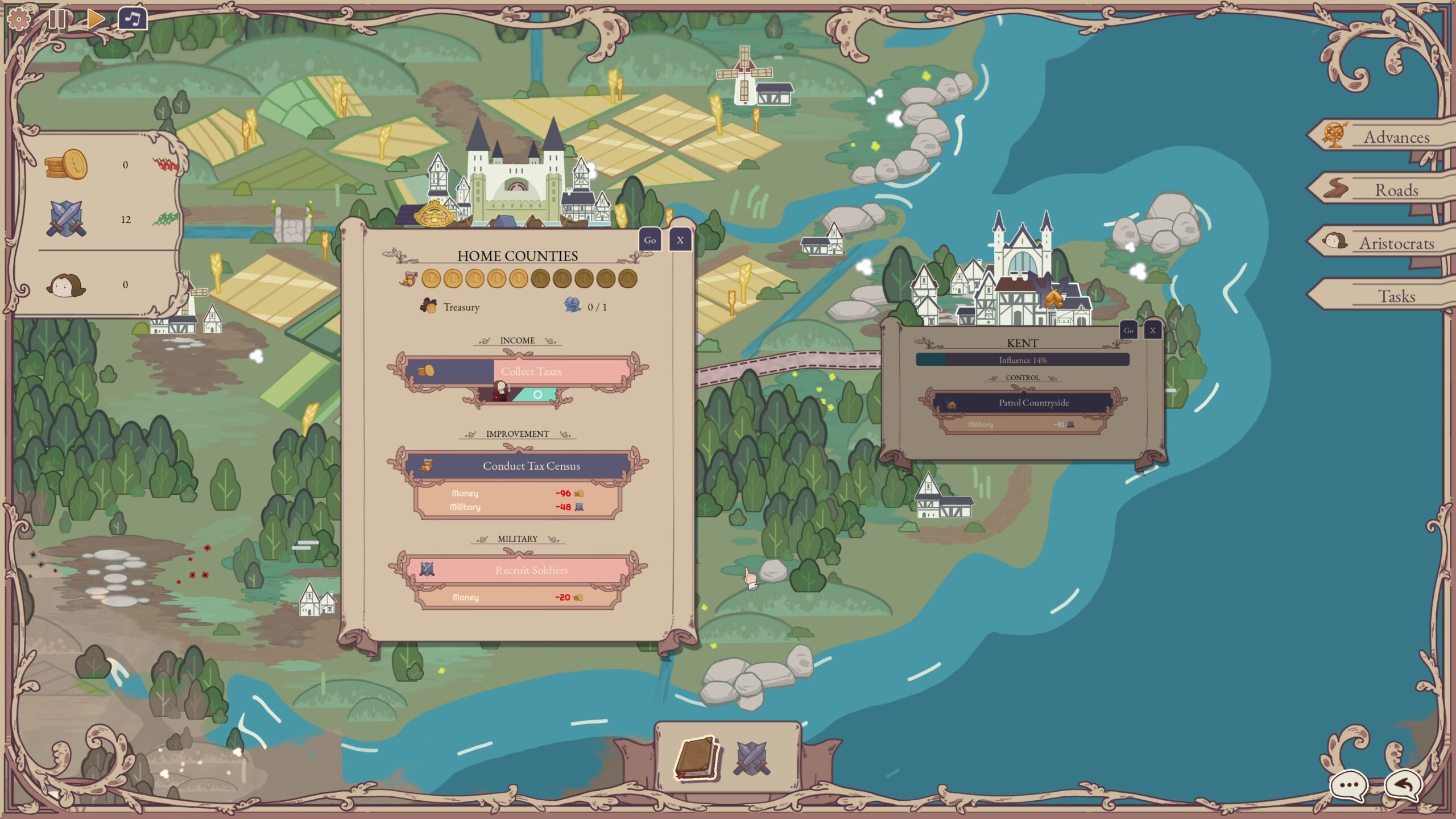
“How Empires Work” begins with the Empress requesting your support. She wants you to build an empire in her name—a request you are, of course, happy to oblige. You start by manually clicking to collect initial taxes from the citizenry, which you then reinvest to hire a few fighters. You then use a portion of your budget and your fighters to increase tax revenue and keep local bandits in check. Once that’s handled, you can raise your first proper militias, begin expanding your small village, and construct walls to protect it from those bandits.
This forms the core gameplay loop, which repeats as you expand into further towns. As you progress, you unlock additional features; for instance, quite early on, you can recruit aristocrats who take over the clicking for you, effectively automating various tasks. Be careful, therefore, when assigning roles—such as collecting taxes or raising a city’s militia.
No Profit, No Expansion
Over time, you will unlock an increasing number of improvements, such as roads that connect your various cities. After all, your goal is to build an empire; you aren’t just managing the single city you started with, but an entire network. In doing so, you must never forget to route the revenue from your other cities back to your capital—for without profit, expansion is difficult. Before you can acquire a new city, you must first secure and develop the territory.
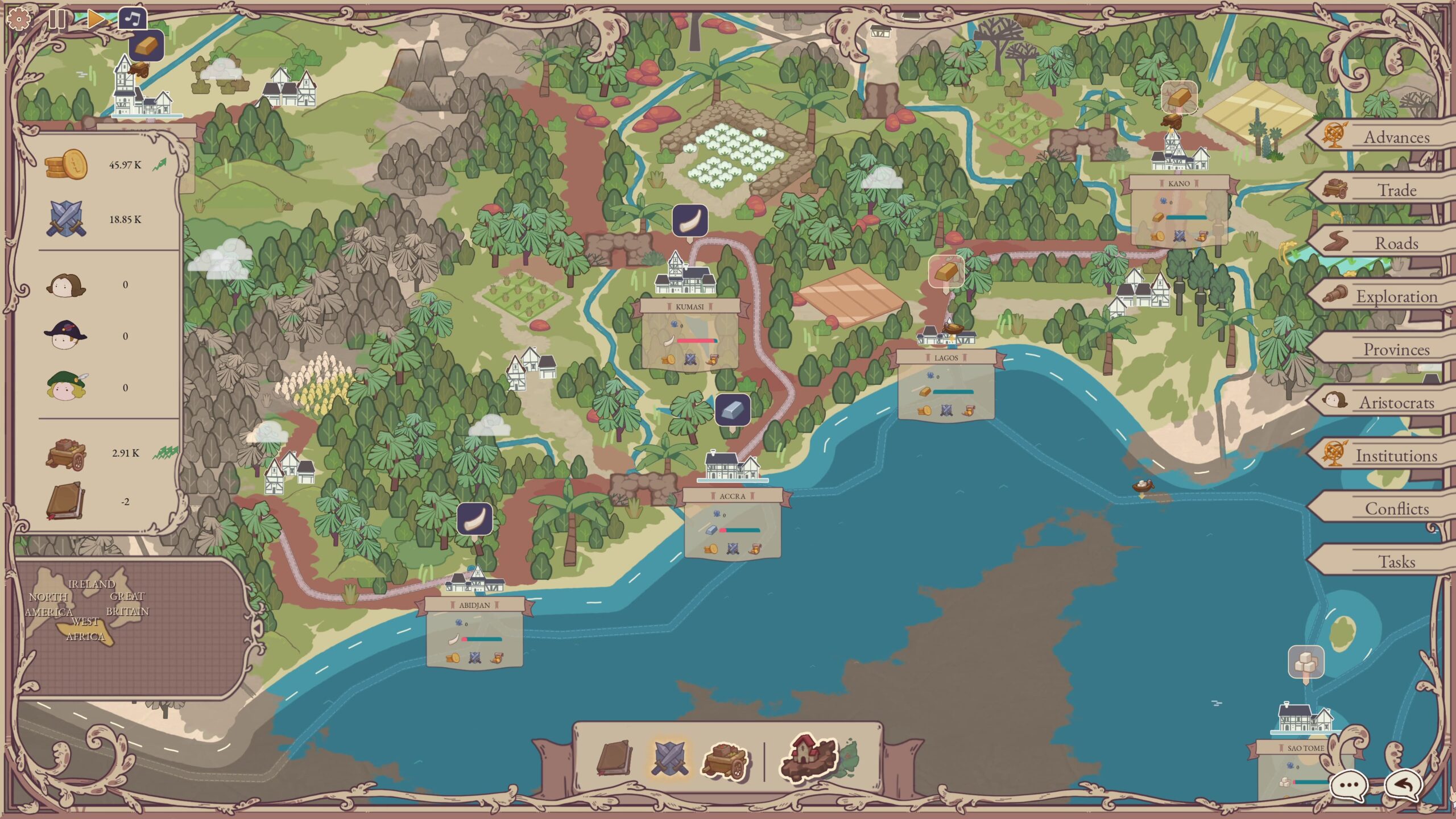
Step by step, you not only fill out the map but also progress through the “tech tree,” unlocking further enhancements and options. These include features like trade caravans, the exchange of messages, and the management of your subjects’ satisfaction. What might seem somewhat sparse at the beginning unfolds as you play, revealing ever-greater possibilities.
A Hand-Drawn World
Initially, you are simply looking at a sheet of unrolled parchment, but with the founding of your first city, a portion of the world map is revealed. As you continue to play, more cities and regions emerge. What makes the map truly special is its aesthetic: instead of a generic design, you are presented with a hand-painted world in which capital, goods, and armies are brought to life. Visually, it is a genuine highlight, possessing a unique charm all its own.
In terms of playtime, the title can easily occupy you for several hours—depending on how quickly you expand and how frequently you check in to make progress. You can certainly expect a gameplay experience lasting roughly ten hours. At a price of €9, it’s a perfectly reasonable deal.
Conclusion
““How Empires Work” offers more than just a neat concept; it effectively combines a grand-strategy approach with an incremental clicker game. What starts off as a bit of a grind gradually becomes more engaging, allowing us to grow our empire—or rather, the Empress’s empire—step by step. The game is genuinely compelling and feels anything but cheap or hackneyed.“
The review key was kindly provided by the developer.